
0%

Global buyers evaluating 2026 leather clutches will need to look beyond seasonal color reports. The strongest choices balance useful capacity, careful construction, and a design that remains appealing after one retail season. Yves Saint Laurent, the influential fashion designer, famously observed, “Fashions fade, style is eternal.” That principle offers a useful lens for buyers, though it is not a leather-goods sourcing rule.

Expect a mix of softly structured silhouettes, compact evening cases, and roomy day-to-night designs. In hand, details matter: a zipper that runs smoothly, corners that resist scuffing, and a lining that does not snag delicate items. Grain, finish, and color can also look different under showroom lighting than beside a shop window. Small samples help reveal that gap.

For leather clutches, buyers should compare workmanship and specifications, not rely on trend language alone. Ask suppliers about leather type, hardware, stitching, care guidance, and consistency between samples and production. Request clear product images and inspect physical samples where practical. One caveat: a polished sample cannot guarantee every production piece will match. That deserves a closer check. This guide explores the silhouettes, finishes, colors, and sourcing questions shaping the 2026 market, with practical notes for global buyers making informed, season-ready decisions.
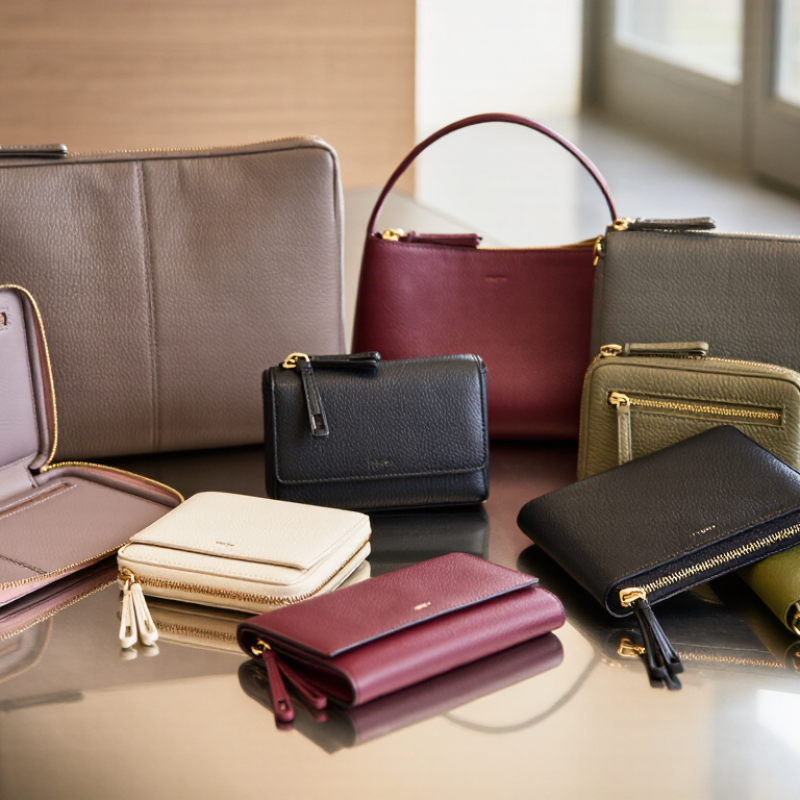
2026 Top Leather Clutch Trends for Global Buyers

What Defines a Leather Clutch in the 2026 Global Market

In the 2026 global market, a leather clutch means more than a small evening bag. Buyers now examine material origin, grain consistency, lining quality, and closure strength. Bain & Company and Altagamma reported that personal luxury goods reached about €363 billion in 2024, with growth largely flat at constant exchange rates. This pressure makes practical value important.

A strong 2026 clutch should balance compact form with daily usability. Buyers increasingly request detachable straps, secure card sections, and interiors that fit a phone. Leather Naturally’s technical guidance highlights traceability, responsible processing, and clear material information as key trust factors. A product description should identify leather type, finish, thickness, and care requirements. Vague words like “premium” are no longer enough.

Tactile details still decide many orders. Soft edges, even stitching, and a clean magnetic snap create immediate confidence during sampling. Yet, some assumptions need review. A highly polished surface may photograph well, but it can show scratches quickly. Smaller clutches also reduce material use, but they may limit real-world function. The 2025 McKinsey State of Fashion report noted continued consumer focus on value, durability, and cautious spending. Therefore, global buyers may define a leather clutch through verified quality, adaptable design, and honest performance rather than decoration alone. Forecasts remain uncertain. That uncertainty matters.

Key Design and Material Trends Shaping Leather Clutches in 2026

Design and Material Trends Shaping Leather Clutches in 2026

In 2026, leather clutches are becoming smaller, smarter, and easier to style. Grand View Research projects the global leather goods market to grow at about 6.9% annually from 2024 to 2030. This growth supports demand for versatile evening and occasion accessories. Buyers should watch compact envelope shapes, soft pouch silhouettes, and detachable wrist straps. These details improve portability without making the clutch look overly casual.

Material decisions are changing too. Vegetable-tanned leather, certified recycled content, and water-based finishes are receiving stronger attention from responsible buyers. However, “sustainable leather” is not a complete specification. Suppliers should disclose leather origin, tanning methods, coating formulas, and testing standards. Textile Exchange’s 2024 materials reporting shows continued pressure for better material traceability across fashion supply chains. The gap remains visible.

Color and surface design will also influence purchasing. Deep cherry, muted olive, warm sand, and brushed metallic finishes can refresh traditional black collections. Light padding, folded construction, and subtle grain add tactile value under store lighting. Bain & Company and Altagamma valued the personal luxury goods market at approximately €363 billion in 2023, showing the scale of premium demand. Yet, not every decorative finish improves performance. Buyers should test edge paint, zipper strength, lining friction, and color transfer before placing large orders. A beautiful sample can still fail in daily use.

How Functionality and Craftsmanship Influence Buyer Preferences

# 2026 Top Leather Clutch Trends for Global Buyers

For global buyers, a leather clutch needs to work beyond a polished product photograph. It should hold a phone, cards, keys, and perhaps a passport without becoming awkwardly bulky. A secure zip, a smooth-running closure, and a detachable wrist strap can make a real difference during travel or evening events. Small details matter. Yet more compartments do not always mean better function; an overfilled clutch can feel stiff and hard to close.

Craftsmanship shapes how that usefulness holds up over time. Look for even stitching, neatly finished edges, and lining that sits flat rather than bunching near the corners. Leather should feel consistent across the main panels, though natural variation is normal. Ask suppliers how they inspect seams and hardware, and request clear photos of interior finishes. One thing buyers can overlook: a beautiful sample may not reflect every unit in a larger order.

Tips: Test the closure with the clutch filled, not empty. Check whether the wrist strap feels secure and comfortable. Compare the weight, lining, and edge finish across samples. A slightly imperfect detail is worth discussing, not hiding; clear specifications help prevent mismatched expectations.

2026 Leather Clutch Trends for Global Buyers

Illustrative buyer-preference index: the values below are examples, not verified survey results or market statistics.

Functionality and craftsmanship are shown as example preference dimensions. Actual buyer preferences vary by market and should be validated with current, representative research.

Regional Differences in Global Demand for Leather Clutch Styles

Regional demand for leather clutches reflects different occasions, climates, and spending habits. Bain & Company’s 2024 luxury study estimated personal luxury goods spending at €364 billion, down 2% from 2023. Its regional findings point to uneven performance, so buyers should avoid treating global demand as one market. In North America, versatile neutral clutches may suit work events and evening use. Across parts of Asia, compact designs with careful detailing can appeal to gift buyers and occasion shoppers. European buyers may favor restrained shapes that work across seasons. These are useful signals, not rules.

Tips: Check local sales data before choosing colors or quantities. Test samples with a small buyer group. A clutch that looks elegant online may feel awkward beside a phone, keys, and a card case.

For sourcing teams, regional preference should guide dimensions, finishes, and merchandising. A soft-grain leather pouch may suit everyday use, while a structured frame clutch can serve formal occasions. McKinsey’s State of Fashion 2025 describes a cautious fashion outlook, reinforcing the value of smaller, testable orders. Bain’s figures cover personal luxury goods, not clutch sales specifically; using them as a direct product forecast would be an imperfect shortcut. Still, they help explain why regional testing matters.

What Buyers Should Assess When Sourcing Leather Clutches

For 2026 leather clutch sourcing, buyers should assess construction before chasing seasonal colors. Bain & Company and Fondazione Altagamma reported that the personal luxury goods market reached €362 billion in 2023, up 4% at current exchange rates. That figure covers more than clutches, but it signals a market where shoppers still value perceived quality. Ask suppliers for leather type, thickness, surface finish, and documented material origin. Then inspect a production sample under daylight: uneven grain, edge paint buildup, and loose lining stitches are easier to spot in person.

Sample inspection checklist
Check the leather, finish, edges, lining, clasp, phone fit, and handle attachment under realistic conditions.

Test the details that affect daily use. Open and close the clasp repeatedly, check whether a phone fits, and pull gently at the handle attachment. Request measurements, hardware specifications, packaging details, and a written inspection plan. The International Organization for Standardization’s ISO 3376 standard provides a method for testing leather tensile strength; it does not, by itself, guarantee a finished clutch will last. Clarify which test applies to the supplied material and who performs it. One sample may still mislead. A rushed review can miss defects, and even experienced buyers sometimes disagree on acceptable grain variation. Ask for a pre-shipment inspection with agreed defect limits, then compare the production goods against the approved sample.

FAQS

Why do leather clutch preferences vary by region?

Occasions, climate, and spending habits differ. Local sales data offers better guidance than broad assumptions.

Which clutch styles may appeal to North American buyers?

Versatile neutral clutches may work for business events and evenings. Check local demand before selecting colors.

What details may matter to gift and occasion shoppers in parts of Asia?

Compact shapes and careful detailing may appeal. Test samples with a small group of likely buyers.

What styles might European buyers prefer?

Restrained shapes that work across seasons may suit some buyers. Preferences still vary by market.

What should buyers inspect in a leather sample?

Check the grain, edge finish, and lining stitches in daylight. Small flaws can be easy to miss.

How can buyers test a clutch’s everyday usability?

Open and close the clasp several times. Check whether a phone, keys, and cards fit comfortably.

What sourcing details should buyers request?

Ask for leather type, thickness, finish, material origin, measurements, hardware specifications, and packaging details. A written inspection plan helps.

Does a leather strength test prove a finished clutch will last?

No. A material test does not guarantee the finished item’s durability. Confirm which test applies and who performs it.

Why compare production goods with an approved sample?

One sample may not represent the full order. Compare items against agreed defect limits during pre-shipment inspection. Still, reviewers may disagree.

Conclusion

In 2026, leather clutches are defined by a balance of refined appearance, practical design, and responsible material choices. Global buyers are increasingly interested in versatile silhouettes, clean structures, compact organization, and finishes that can transition from formal occasions to everyday use. Key trends include soft and textured leathers, subtle color palettes, adaptable straps, organized interiors, and carefully considered details that enhance both visual appeal and usability. Craftsmanship remains essential, with attention to stitching, edge finishing, hardware durability, lining quality, and overall construction influencing perceived value.

Demand also varies by region. Some markets favor minimalist and lightweight styles, while others prefer decorative details, larger capacities, or versatile evening-to-day designs. When sourcing leather clutches, buyers should assess material consistency, workmanship, functional performance, sizing, color accuracy, packaging, production reliability, and compliance with applicable market requirements. A successful product should combine contemporary style with durability, comfort, and dependable quality, allowing it to meet diverse consumer expectations across the global fashion accessories market.

Evelyn

Evelyn

Evelyn is a dedicated marketing professional with a strong understanding of the company’s products, customers, and industry trends. With a thoughtful, research-driven approach, she transforms complex product information into clear, practical, and engaging content that helps readers make informed......