Enterprise Procurement Intelligence
Deconstructing the Leather Messenger Bag: What Sourcing Teams Must Verify
A comprehensive examination of hide selection, mechanical reinforcement, edge finishing chemistry, and ergonomic load distribution for OEM contract production.
In the contemporary B2B supply ecosystem, the classic leather messenger bag has transitioned from a utilitarian courier sack to a high-precision, hybrid-work workstation. Whether your brand addresses corporate executives, design professionals, or urban digital nomads, the commercial viability of an enterprise-grade messenger bag hinges on critical engineering decisions executed at the pattern and tannery stage. Sourcing managers frequently encounter issues with handle shear, edge-paint peel, zipper delamination, and dye rub-off when working with unverified intermediaries.
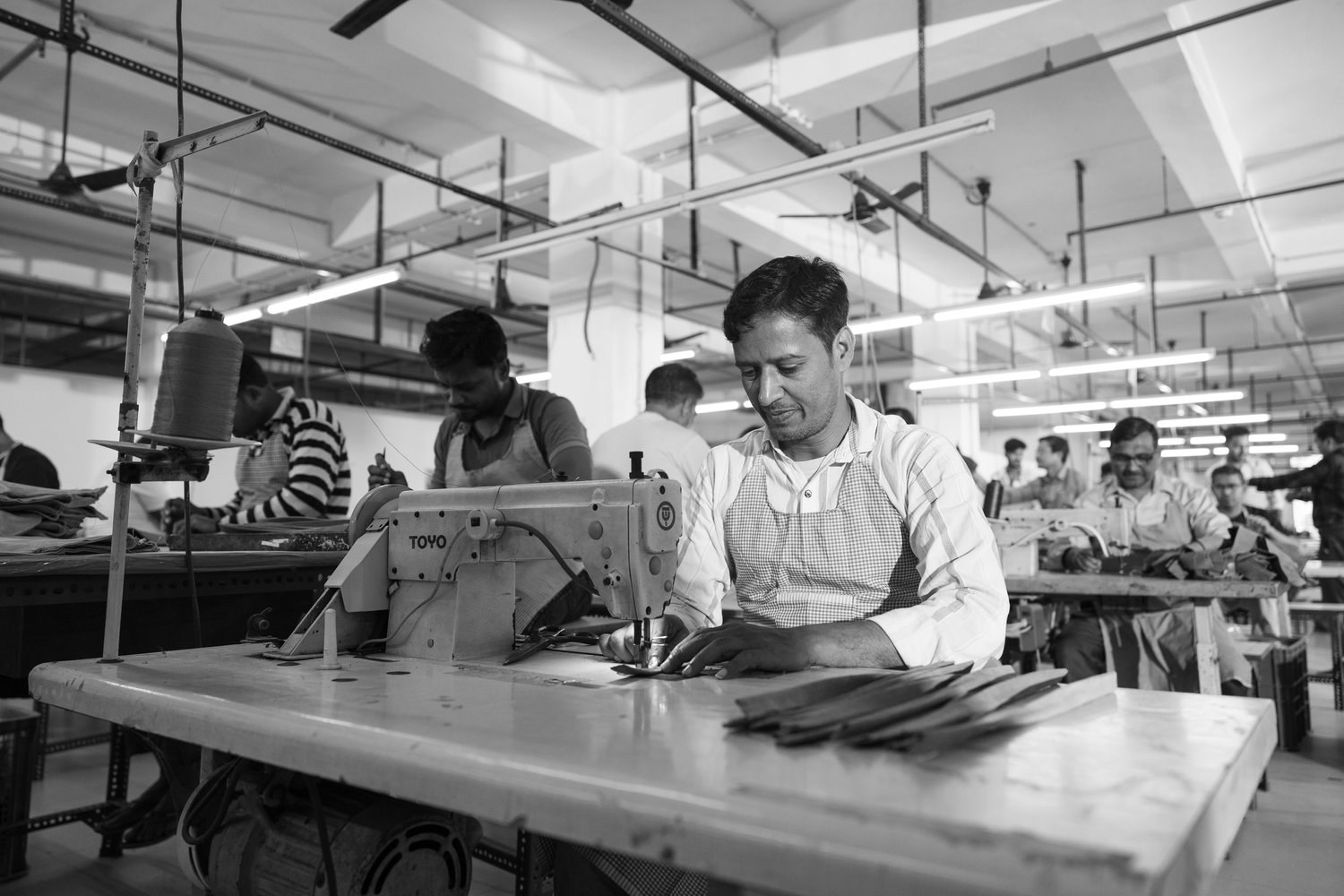
At Raja & Mitsu Fashions, backed by nearly three decades of dedicated leathercraft in Kolkata since 1996, we emphasize that information gain in procurement comes from understanding structural anatomy. A messenger bag experiences disproportionate kinetic force: unlike a tote with vertical gravity, a messenger bag is suspended across an asymmetrical cross-body axis, putting dynamic strain on the top gusset, shoulder strap anchors, and flap hinge lines.
1. Substrate Analysis: Full-Grain vs. Top-Grain Leather Chemistry
Procurement directors must look beyond generic marketing terms. The structural performance of commercial leather messenger bags is determined by tanning methodology and hide thickness:
- Full-Grain Buffalo & Cowhide (1.4mm – 1.8mm): The gold standard for heritage and heavy-duty business bags. The untouched epidermis retains tight collagen fibers, granting extraordinary tear resistance (>120 N) and natural abrasion defense. When treated with vegetable extracts (mimosa, quebracho, chestnut), it develops a coveted rich patina over years of commercial use.
- Chrome-Tanned & Semi-Aniline Leather (1.2mm – 1.4mm): Offers consistent color fastness, supple drape, and inherent water/oil repellence. Ideal for contemporary slim laptop messengers requiring uniform colorways across mass-volume production runs.
- Metal-Free & Bio-Tanned Substrates: Rapidly emerging as a non-negotiable procurement standard in Europe and the Americas to comply with circular economy benchmarks and eliminate heavy metals like chromium VI.
| Component |
Standard Commercial Grade |
Raja & Mitsu Industrial Benchmark |
Quality Test Reference |
| Main Shell Leather |
Corrected grain split leather (1.0 - 1.2mm) |
Full-grain cowhide or vegetable-tanned buffalo (1.4 - 1.8mm) |
ISO 3376 Tensile & Tear Strength |
| Strap Anchors & Tabs |
Single leather layer with PU backing |
Full leather with bonded polyester webbing core reinforcement |
Static pull test (>350N yield point) |
| Internal Hardware |
Standard cast zinc-alloy with electro-wash |
Solid forged brass or high-tensile zinc with PVD lacquer finish |
72-hour neutral salt spray (ASTM B117) |
| Laptop Compartment |
Single 3mm polyurethane open foam |
High-density EVA foam (6-8mm) + anti-scratch velvet micro-lining |
Drop impact test from 1.2m |
| Edge Finishing |
1-2 coats synthetic latex paint |
3-4 hand-sanded coats with Italian edge ink + thermal sealing |
Vamp flex tester & heat resistance check |
2. Ergonomic Load-Distribution & Seam Architecture
When evaluated in professional environments, a loaded 15.6-inch laptop messenger bag frequently weighs between 3.5 to 5.5 kilograms. Inferior bags fail along the top shoulder pad seam or rupture their bottom gussets. Our engineering incorporates high-tensile bonded nylon threads (metric size 30/40), double-lockstitched box-X configurations across load-bearing hinges, and micro-skived internal reinforcements that disperse kinetic energy over a wide surface area, avoiding focal stress tears.