
0%

A travel bag earns its place through ordinary trips, not polished product photos. Leather travel duffels should carry clothes, protect essentials, and remain comfortable when a station platform is crowded. The right choice depends on how you travel. A weekend driver needs different features from someone lifting a bag into overhead storage.

Saddleback Leather founder Dave Munson is associated with the line, “They’ll fight over it when you’re dead.” It points to durability, though durability alone does not make a duffel right for you. A thick hide can feel reassuring, yet add weight before you pack a shirt. Inspect the stitching around handles, the zipper track, and the base corners. These areas take real strain. Check whether the shoulder strap sits comfortably and whether the opening lets you reach items without digging.

There is no perfect leather. Full-grain leather develops character, but scratches and color changes are part of that story. Some travelers enjoy the patina; others may find it frustrating. That is worth admitting before buying. Smell the leather if you can, feel its surface, and test the empty bag’s weight in your hand. Compare dimensions with your usual luggage limits, and look for a clear return policy. Then consider the details: a secure pocket for keys, a washable lining, or metal feet that keep the base off a damp floor. The best leather travel duffels balance craftsmanship with your actual routine. Not just appearance.
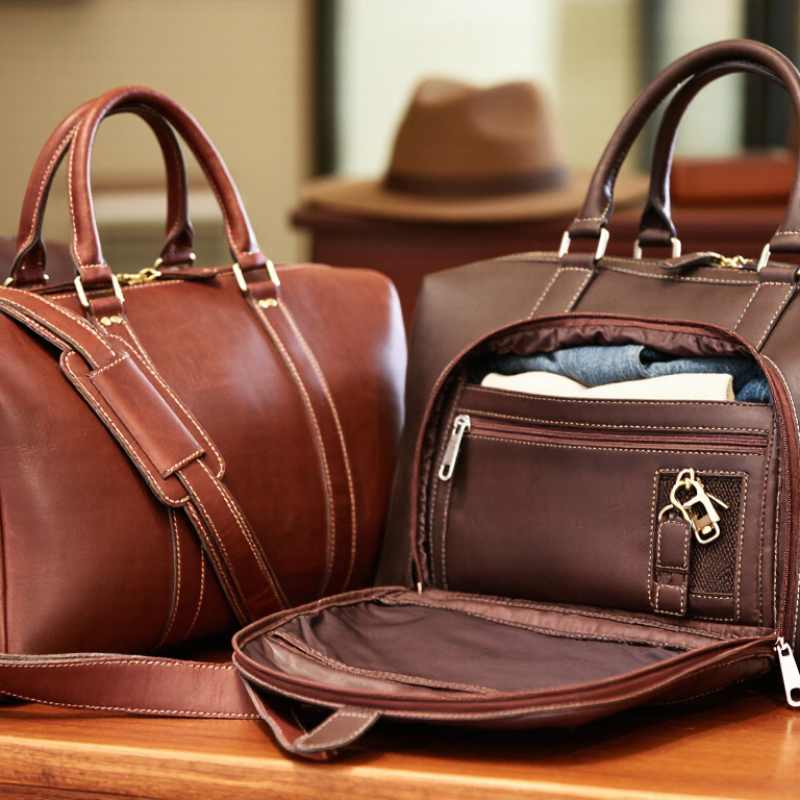
How to Choose the Best Leather Travel Duffels?

Identify Your Travel Needs and Packing Requirements

Before choosing a leather travel duffel, consider where you are going and how you will carry it. A one-night train trip may call for a compact bag with space for a change of clothes and toiletries. A longer stay often needs room for extra layers, shoes, and a book or tablet. Write down what you actually pack for a typical trip. That small list is more useful than guessing from a bag’s appearance. Less can be enough. If you often walk between stations, a heavy, oversized duffel may become tiring, especially when fully packed.

Next, check how your belongings fit, not just the stated capacity. Fold a sweater, place your shoes beside it, and leave room for items you may need quickly. A wide opening and a few secure pockets can make a rushed departure easier. Think about whether the bag must fit beneath a seat or in an overhead compartment; size limits vary, so check your carrier’s current guidance. Leather can feel substantial, and the bag itself adds weight before packing begins. I still tend to underestimate that. Consider handles, a detachable shoulder strap, and how long you expect to carry the load. Check the dimensions. Then compare them with your usual packing list, rather than an idealized one.

How to Choose the Best Leather Travel Duffels? - Identify Your Travel Needs and Packing Requirements
Travel Need Typical Trip Length Suggested Capacity Approximate Duffel Size Typical Packing Load Useful Features
Gym session or overnight stay 1 day to 1 night 20–30 L About 18–20 in long Change of clothes, toiletries, small towel, and a pair of shoes Wide opening, interior pocket for small items, and a removable shoulder strap
Weekend getaway 2–3 nights 30–45 L About 20–23 in long Two or three outfits, sleepwear, toiletries, and one extra pair of shoes Comfortable handles, a secure closure, and a separate pocket for documents or accessories
Short business trip 2–4 nights 35–50 L About 21–24 in long Work clothes, casual clothing, toiletries, and a compact laptop or tablet Padded device sleeve, organized interior pockets, and a structured base
Extended holiday 4–7 nights 50–65 L About 24–27 in long Several outfits, toiletries, accessories, and multiple pairs of shoes Reinforced stitching, sturdy hardware, and a comfortable adjustable strap
Road trip or gear-heavy travel Variable 60–80 L About 27–30 in long Bulky clothing, outdoor gear, or extra footwear; best when checked or carried in a vehicle Durable base, strong handles, and exterior pockets for items that need quick access
Planning note: Capacity and dimensions are approximate; actual packing space varies by bag shape and construction. Carry-on size limits differ by airline and route, so check current requirements before traveling. Leather can add weight, so consider the empty bag weight along with your expected packed load.

Compare Leather Types, Grades, and Finishes

Leather labels can be confusing because grading terms are not always used consistently. Full-grain leather keeps the natural surface, including small marks, and often develops a visible patina with use. Top-grain leather has its surface lightly corrected, so its appearance is more uniform. “Genuine leather” is a broad label, not a dependable quality ranking. Feel the difference. Compare the hide’s texture and flexibility, not just its name.

A duffel’s finish affects how it handles travel. Aniline finishes show more natural color variation, but can stain more easily. Pigmented finishes hide marks better and are often simpler to wipe clean. Waxed or pull-up leather may develop lighter areas where it bends; some travelers like this lived-in look, while others find it uneven. No finish is perfect. Check the seams, handles, and base, since these areas take repeated strain. A polished surface can look impressive under shop lights, but that alone says little about durability.

Tips: Press the leather gently and inspect how it bends. Ask whether the finish needs conditioning, and test care products on a hidden spot first. Choose a softer, lighter hide for occasional carry; for frequent trips, prioritize sturdy construction and a finish you can maintain. I’d still allow room for personal preference: the most practical bag may not be the one you love carrying.

Evaluate Construction, Hardware, and Carrying Comfort

A leather travel duffel should feel dependable before it looks impressive. Check the seams where handles meet the body; these points carry much of the bag’s weight. Turn it inside out. Look for even stitching, finished edges, and a lining that does not pull away at the corners. Leather thickness matters, but thicker is not always better if the bag feels stiff or awkward to lift. Test the hardware, too. Zippers should move smoothly without catching the lining, while buckles and rings should feel solid rather than flimsy. Small details matter.

Carrying comfort becomes obvious when the duffel is loaded. Try the handles in your hand, then adjust the shoulder strap and walk a short distance. A wide, padded strap can reduce pressure, but padding that slips or bunches is not much help. Notice whether the bag swings against your hip or stays balanced. I have sometimes focused too much on polished leather and overlooked strap placement; that was a poor trade-off on longer walks. If possible, test the bag with a few realistic items inside. An empty duffel can hide an uncomfortable design.

Choose the Right Duffel Size and Travel Features

The right leather travel duffel should fit your trip, not just look spacious on a shelf. For an overnight stay, a compact bag often holds a change of clothes, toiletries, and a book without becoming awkward to carry. For several days, allow room for shoes and a light jacket, but remember that leather adds weight before you pack anything. Check the load. Lift a similar-sized bag in a shop, or estimate the packed weight at home. A bag that feels manageable empty can pull on your shoulder when full.

Measure the duffel before buying and compare its dimensions with your usual airline’s carry-on guidance. Limits vary, and a soft-sided bag may still bulge when overpacked. Small details matter. Look for a padded, adjustable shoulder strap, sturdy handles, and zippers that open wide enough to reach items at the bottom. A separate shoe pocket can help keep clothing clean, though it takes space from the main compartment. Interior pockets are useful for a passport or charging cable, but too many can make packing less flexible.

Consider where the bag will travel. Protective feet help when you set it on a station floor, while a luggage sleeve can steady it on a rolling suitcase. If the leather is untreated, rain may leave marks, so check care guidance and consider whether you are comfortable with natural wear. It is easy to choose more capacity than you need; a half-empty duffel can shift around and feel less balanced.

How to Choose the Best Leather Travel Duffel

Choose a capacity that fits your trip length, then check the bag’s dimensions against your carrier’s current carry-on rules.

Capacity ranges are practical packing estimates, not standardized limits. Bulky clothing, shoes, and personal packing habits can change the size you need.

Assess Maintenance Needs, Durability, and Overall Value

Leather care is part of the real cost of a travel duffel. Unfinished leather may darken when wet, while coated finishes usually wipe clean more easily. Ask how the hide is sealed, and check the care instructions before buying. A damp cloth can remove surface dust; soaking leather or drying it beside a heater can leave stiff patches. Small details matter. Inspect handle attachment points, zipper stitching, and the base, where a packed bag rubs against floors. A strong hide cannot compensate for weak seams.

Durability also depends on the trip. SITA’s 2024 Baggage IT Insights report recorded 6.9 mishandled bags per 1,000 passengers worldwide in 2023. The U.S. Department of Transportation’s 2023 Air Travel Consumer Report put mishandled baggage at about 0.58 bags per 100 passengers. These figures describe baggage handling, not leather quality, but they make reinforced handles and protected corners worth checking. For value, compare the purchase price with capacity, hardware quality, repair options, and the care routine you will actually follow. A heavier bag may last, yet become tiresome on long walks through terminals. Patina is not proof. Scratches can add character, but cracked edges and loose stitching signal wear that may cost more to fix than expected. I would not pay extra for a “heritage” look alone; ask what repairs are practical and whether replacement straps are available.

FAQS

What is the difference between full-grain and top-grain leather?

Full-grain keeps natural marks and may develop a visible patina. Top-grain is lightly corrected for a more even appearance.

Does “genuine leather” guarantee high quality?

No. It is a broad label, not a reliable quality ranking. Check the texture, flexibility, seams, and finish instead.

Which leather finish is easiest to maintain?

Pigmented finishes often hide marks and wipe clean more easily. Aniline finishes show natural color variation but may stain more readily.

How can I check a duffel’s construction?

Inspect stitching where handles meet the bag, along with finished edges and lining corners. Test zippers, buckles, and rings. Small details matter.

How do I know if a duffel will feel comfortable?

Try it with a few realistic items inside. Adjust the shoulder strap and walk briefly. Notice pressure, slipping, and how the bag swings.

What size duffel works for an overnight trip?

A compact bag can hold a change of clothes, toiletries, and a book. Leave room for your needs, but remember leather adds weight.

Which travel features are useful?

Wide-opening zippers make items easier to reach. A shoe pocket separates footwear, while a luggage sleeve can steady the bag on a rolling suitcase.

What should I consider before carrying a leather duffel in rain?

Untreated leather may show water marks, so check its care guidance. I have sometimes chosen looks over practicality; I would reconsider that.

Conclusion

Choosing the best leather travel duffels starts with understanding how you travel and what you need to pack. Consider whether the bag is for short weekend trips, frequent journeys, or occasional use, then compare leather types, grades, and finishes to find a balance of appearance, feel, and resilience. Carefully inspect the stitching, seams, zippers, buckles, and other hardware, and think about carrying comfort, including handles, shoulder straps, and how the bag feels when loaded.

Select a size that suits your packing habits without becoming cumbersome, and look for practical features such as well-organized compartments and easy-access pockets. Before deciding, consider how much care the leather will need and whether its expected durability justifies the cost. The right leather travel duffels combine a suitable capacity, dependable construction, comfortable carrying, and a finish you are willing to maintain, making them a practical companion for your particular travel routine.

Evelyn

Evelyn

Evelyn is a dedicated marketing professional with a strong understanding of the company’s products, customers, and industry trends. With a thoughtful, research-driven approach, she transforms complex product information into clear, practical, and engaging content that helps readers make informed......