
Leather backpacks are not one uniform category. Their differences begin with the hide, then show up in weight, texture, construction, and daily use. Full-grain leather keeps the hide’s natural surface and often develops a darker patina around handles and corners. Top-grain leather is typically sanded or finished for a more even look. Suede feels softer, but its brushed surface can mark more easily. “Genuine leather” is a broad label, not a reliable quality ranking.
The market context is useful, but it needs careful reading. Grand View Research estimated the global leather goods market at $468.49 billion in 2023 and projected 6.6% annual growth from 2024 to 2030. That figure covers many products, not leather backpacks alone. It signals a substantial category, not proof that every bag is well made. Look at stitching, lining, hardware, and strap attachment points; those details often reveal more than a polished product photo. Fashion designer Vivienne Westwood’s advice, “Buy less, choose well, make it last,” offers a practical lens for comparing options. Still, durability depends on care and construction, not leather type alone.
This guide examines material grades and backpack styles, from compact daypacks to roll-top designs. It also considers comfort, upkeep, and where each type may suit different routines. There is no perfect ranking. Some distinctions remain messy, especially when product labels provide little detail. That is worth questioning.
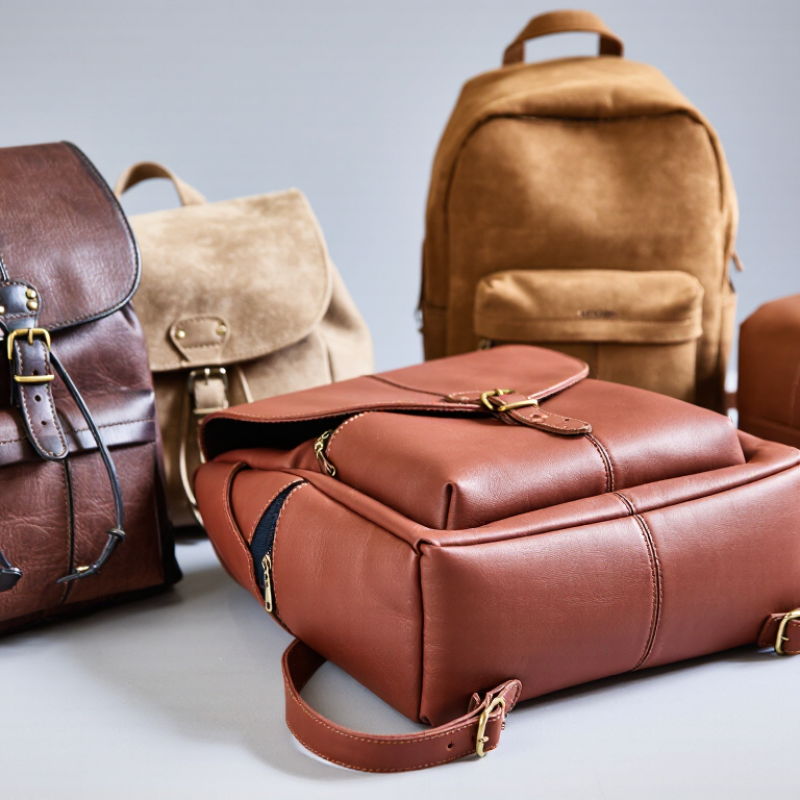
Leather backpacks are best classified by three practical features: construction, leather type, and intended use. Construction separates panelled daypacks from structured commuter bags and softer, unlined designs. Leather type may include full-grain, top-grain, corrected-grain, or split leather; these labels describe different surfaces and processing, not guaranteed quality by themselves. Check the product details and seams.
Use also matters. A compact daypack usually has a small main compartment, while a travel pack may add a padded laptop sleeve, water-bottle pockets, and reinforced straps. Capacity is measured in litres, but internal dividers can make two equally sized bags feel very different. Fit matters. A loaded bag should sit close to the back without pulling sharply at the shoulders.
Material descriptions need care. Full-grain leather retains the outer hide surface, while corrected-grain leather is sanded or otherwise treated to create a more uniform finish. These differences affect appearance, wear, and maintenance. Grand View Research estimated the global leather goods market at US$468.49 billion in 2023, but that broad figure includes many products, not backpacks alone. Labels can blur. A useful comparison records leather type, capacity, lining, hardware, and intended load, rather than relying on style names alone.
| Classification basis | Backpack type | Typical leather | Common construction and features | Typical use | Practical considerations |
|---|---|---|---|---|---|
| Silhouette and closure | Flap-top backpack | Often full-grain or top-grain cowhide; other hides may also be used. | A fold-over flap usually covers a drawstring, buckle, or magnetic closure. May have external pockets. | Everyday carry, commuting, and casual travel. | The flap adds a layer over the opening, but access can be slower than with a simple zip-top design. |
| Silhouette and closure | Zip-top backpack | Commonly cowhide, including corrected-grain or top-grain leather. | A zipper closes the main compartment; the shape may be streamlined or structured. | Work, school, and daily use where quick access is useful. | Check zipper quality and stitching. Leather itself is not automatically waterproof. |
| Silhouette and closure | Drawstring or bucket backpack | Often soft, supple leather such as lambskin or softer cowhide. | A gathered top tightens with a cord, sometimes under a separate flap or magnetic fastening. | Light everyday carry and casual outings. | Flexible sides can make the interior less protective for fragile items; avoid overloading the drawstring. |
| Structure and intended function | Structured work or laptop backpack | Typically firm cowhide with a textile lining; some designs use leather only on exterior panels. | Reinforced base, defined compartments, and sometimes a padded sleeve sized for a device. | Office commuting and carrying documents or electronics. | Confirm the sleeve dimensions and padding; the leather shell alone does not provide impact protection. |
| Structure and intended function | Travel or weekender backpack | Often thicker cowhide or a leather-and-textile combination. | Larger main compartment, wide opening, and organizational pockets; some versions include a luggage pass-through. | Short trips and carry-on use, depending on size and airline requirements. | Leather can add significant weight. Check empty weight, dimensions, strap comfort, and care instructions. |
| Leather grade and surface | Full-grain leather backpack | Leather retaining the outer grain layer, with its natural surface characteristics. | May show natural grain variation, scars, or marks; commonly develops a patina with use. | Long-term daily use when a natural-looking surface is preferred. | Appearance and water resistance vary by finish and treatment. Keep it dry and follow the maker's care guidance. |
| Leather grade and surface | Top-grain leather backpack | The outer grain layer, usually sanded or finished to create a more uniform surface. | Often has a consistent color and texture; may have a protective coating. | Work and everyday styles where a more even appearance is desired. | Finishes differ, so cleaning and conditioning needs depend on the specific surface treatment. |
| Leather grade and surface | Suede or nubuck backpack | Suede uses the inner surface of leather; nubuck is made by lightly abrading the outer grain. | Soft, napped surface with a matte appearance; may be used throughout or as a panel detail. | Casual use and outfits where texture is a key feature. | The nap can mark or absorb moisture more readily than many smooth finished leathers; use suitable care products. |
| Material composition | Leather-and-textile hybrid backpack | Leather panels or trim combined with materials such as canvas, nylon, or polyester. | Textile may form the body, lining, or back panel, while leather is used at stress points or on visible sections. | Commuting and travel when lower weight or mixed-material construction is preferred. | Check the material breakdown: a leather-trim design is different from a backpack made mostly of leather. |
Note: These categories can overlap. A backpack may, for example, be a zip-top laptop style made from full-grain leather; leather names and finishes should be checked in the product's material details.
Choose a close-fitting shape, padded laptop sleeve, and secure inner pocket. A reinforced base helps when the bag rests beside a desk.
It can feel heavy, even before you pack it. Try it with your usual items inside.
Look for a wide-opening main compartment, sturdy zippers, and space for a change of clothes. A top handle is handy in crowded train aisles.
A simple daypack with adjustable straps and a few compartments is often practical. It can hold a notebook, water bottle, and light jacket.
A tote backpack switches between shoulder carry and backpack straps, with a broad opening. A satchel-style version looks more formal, but its flap or buckles may slow access.
Test the strap stitching and move the zippers. Open the bag and picture where your keys, transit card, and water bottle will go.
No. Leather may soften with use, but inconvenient pockets usually stay inconvenient.
Carry it full, not just in front of a mirror. I may be overthinking this, but strap fit can matter more than appearance.
Leather backpacks can be classified in several ways, including the kind of leather used, the tanning process, their shape, and how they are constructed. Full-grain, top-grain, and suede leathers each have distinct textures and qualities, while different tanning methods affect a backpack’s appearance, flexibility, and aging. Design also matters: a structured pack may hold its shape and organize belongings, whereas a softer or more compact style can feel lighter and more relaxed.
Different leather backpacks suit different needs, from everyday commuting and travel to school or casual outings. Their features may include adjustable straps, padded compartments, multiple pockets, secure closures, and reinforced stitching. Comparing these details can help clarify what sets each type apart and make it easier to choose a backpack that balances appearance, comfort, durability, and practical storage.