Finding a reliable leather goods exporter in China requires more than comparing prices. It demands careful checks, practical questions, and attention to small production details. A polished website can still hide weak quality control.
Leather sourcing specialist Dr. Ian MacLaren explains, “A dependable exporter proves quality through records, samples, and consistent communication.” This principle offers a useful starting point. Buyers should examine the exporter’s product range, factory relationships, material sourcing, and inspection procedures. Ask for recent product samples. Study the stitching, edge painting, lining, hardware, and logo placement. These details reveal more than attractive catalog photographs.
Experience also matters. A capable leather goods exporter should understand different leather grades, surface finishes, packaging needs, and international documentation. Request clear information about production capacity and lead times. Visit the factory when possible. If travel is impractical, arrange a live video inspection. Look closely at cutting tables, sewing stations, storage areas, and finished-goods shelves.
Do not trust promises alone. Verify them.
Buyers should also request references from comparable clients. Confirm whether the exporter can maintain quality across repeated orders, not only one impressive sample. Even careful sourcing has weak points. Inspection costs time, and communication may occasionally fail. That is precisely why written specifications, approved samples, and independent quality checks remain valuable.
The right partnership grows slowly. It is built through evidence, honest conversations, and consistent performance. This guide explains how to evaluate Chinese exporters with greater confidence, while recognizing that no checklist can replace professional judgment.
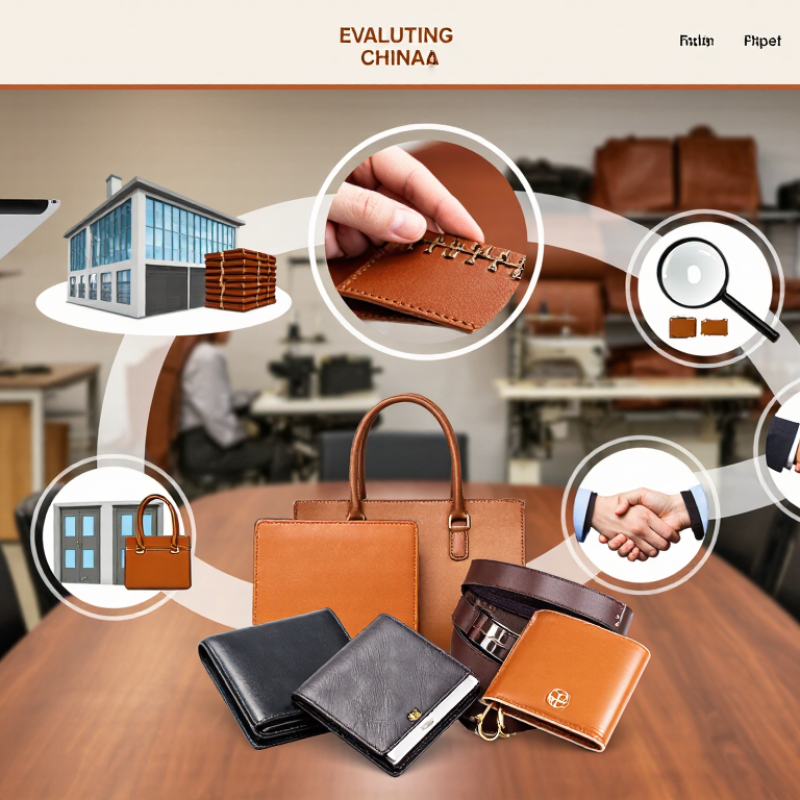
Classify Leather Goods Under HS Code 4202 Before Supplier Research
How to Find a Top Leather Goods Exporter in China?
Classify Leather Goods Under HS Code 4202 Before Supplier Research
Before contacting Chinese exporters, classify your product under HS Code 4202. This code covers handbags, wallets, travel bags, suitcases, and similar containers. It also includes products made from leather, composition leather, plastic, textile, and other materials. Material alone does not decide the classification. Product function and construction matter too.
The World Customs Organization provides the HS framework used by customs authorities worldwide. UN Comtrade data shows that global trade in HS 4202 products exceeded 90 billion US dollars in 2023. China remains one of the largest exporting countries in this category. However, HS 4202 is broad. A supplier experienced in textile luggage may not understand premium leather handbags. I still recheck the code with a customs broker when lining, accessories, or mixed materials create uncertainty.
Tips:
Prepare a product sheet before supplier research. Include dimensions, leather type, lining, closures, packaging, and intended use. Ask each exporter to confirm the proposed HS code in writing. Then compare its answer with the WCO description and your destination customs guidance. Request recent production photos, material test reports, and samples from the same factory. Do not rely only on catalog images. A polished sample can hide weak edge painting or uneven stitching. Supplier verification is slower, but HS accuracy makes quotations, duties, and shipping documents more reliable.
Shortlist Chinese Exporters with 3+ Years of Verified Trade Records
How to Find a Top Leather Goods Exporter in China?
Shortlist Chinese Exporters with 3+ Years of Verified Trade Records
A reliable exporter should show at least three years of documented international trade. Ask for redacted invoices, packing lists, and shipping records. Check whether company details remain consistent across these documents. The exporter’s registered name, address, and product descriptions should match. Small differences deserve questions.
Look for experience with similar leather goods, not only general trading activity. Request recent product samples, material specifications, and production photographs. A professional supplier can explain leather grading, edge finishing, stitching density, and hardware inspection. Ask how they handle color variation between sample and bulk orders. Good answers are specific.
Verify trade history through customs data, independent business records, and buyer references where available. Do not rely only on polished certificates or a busy website. A video call can reveal whether the office, workshop, and sample room actually exist. Three years is a useful filter, not a guarantee. Records may be incomplete or poorly translated. That is worth remembering.
Compare several exporters using the same checklist. Review response time, document quality, sample consistency, and payment terms. A dependable partner should identify limitations instead of promising everything. If an exporter avoids basic verification, remove them from the shortlist. The cheapest quote can hide weaker quality control, delayed production, or unclear material information.
Audit Factories Against ISO 9001 and AQL 2.5 Quality Standards
How to Find a Top Leather Goods Exporter in China?
A reliable exporter should welcome an independent factory audit. Ask for the ISO 9001 certificate, issuing body, scope, and expiry date. A certificate alone is not proof. During a site visit, check whether procedures match daily work. Review incoming leather inspections, supplier records, cutting controls, stitching instructions, and final inspection reports. Look for dated forms, trained inspectors, and traceable batch numbers. Clean shelves help, but organized records matter more.
Use AQL 2.5 as a measurable inspection framework, not a magic guarantee. Agree on the lot size, sample level, defect definitions, and acceptance limits before production. Inspectors should separate critical, major, and minor defects. Typical checks include uneven stitching, loose hardware, color variation, surface scratches, odor, and incorrect dimensions. Photograph samples beside a ruler. Keep sealed reference pieces for comparison. Small details become expensive when repeated across thousands of units.
I have seen factories pass visual checks while missing weak strap attachments. That experience changed how I audit. Request stress tests, aging checks, and corrective-action records for repeated failures. Ask who approves rework and how rejected goods are controlled. A serious supplier can explain results without hiding uncomfortable findings. Still, audits have limits. One visit may not represent every shift or production season. Combine factory evidence, pre-shipment inspection, and clear communication. That creates a more dependable sourcing decision.
Verify REACH Compliance at the 0.1% SVHC Concentration Threshold
Finding a capable leather goods exporter in China requires more than reviewing stitching and delivery times. REACH evidence should be part of supplier qualification. The critical check is the 0.1% SVHC threshold by weight in an article, not the finished product’s total weight. A wallet may contain leather, lining, metal fittings, adhesive, and surface coatings. Each component needs attention. Small parts matter.
Ask the exporter for a current SVHC declaration covering every material and accessory. The document should identify the Candidate List version, material supplier, test basis, and responsible signatory. Do not accept a generic “REACH compliant” statement without supporting records. Request independent laboratory reports when risk is unclear, especially for coated leather, recycled materials, PVC details, and plated hardware. Reports should match the production specification, not an old sample.
A reliable exporter can trace lot numbers, retain purchase records, and explain how changes are controlled. Ask what happens when the Candidate List changes. In the EU, an article containing an SVHC above 0.1% may trigger communication duties, while other obligations can apply. Requirements depend on the product and supply role. In practical supplier reviews, polished compliance files sometimes fail because one zipper or adhesive was excluded. That mistake is easy to miss. No process is perfect. Clear evidence is stronger than confident promises.
Under REACH Article 33, an article containing a Candidate List SVHC above 0.1% by weight may trigger communication duties. The chart converts the 0.1% threshold into the corresponding maximum SVHC mass for different article weights: 0.1% equals 1 gram per kilogram of article.
Reference: European Chemicals Agency (ECHA), REACH Article 33 and the Candidate List of Substances of Very High Concern.
Compare 3+ FOB/CIF Quotes Under Incoterms 2020 and MOQ Terms
How to Find a Top Leather Goods Exporter in China?
China remains a major leather goods supplier. ITC Trade Map data shows China exported over US$30 billion in HS 4202 products in 2023. Use this scale carefully. Large export volume does not guarantee consistent workmanship.
Request at least three comparable FOB and CIF quotes under Incoterms 2020. Keep leather grade, lining, hardware, packaging, inspection standard, and delivery port identical. FOB usually separates ocean freight from the supplier’s price. CIF includes cost, insurance, and freight to the named port, but destination charges may remain payable. Ask for the insurance coverage and shipping documents in writing. Compare the landed cost, not only the unit price. A low quote can hide higher MOQ, mold fees, or weak replacement terms. Check whether the factory accepts 100, 300, or 1,000 pieces per design. Confirm production capacity through dated samples, factory records, and independent pre-shipment inspection. The ISO 9001 quality framework can support process evaluation, but certification alone proves little.
Tips: Build a quote table. Add sample cost, MOQ, lead time, payment stages, carton size, and defect allowance. Verify the exporter’s legal entity and export history through official records. I have seen “CIF” used casually in quotations; that is a warning sign. Recheck every assumption. Prices also change with leather yield, currency movement, and seasonal freight rates. WHO? No, that is not the right source here; use ITC Trade Map and freight forwarder quotations instead.
How to Find a Top Leather Goods Exporter in China? — Compare 3+ FOB/CIF Quotes Under Incoterms 2020 and MOQ Terms
| Quote ID |
Comparable Product Specification |
Material & Construction |
MOQ |
FOB Incoterms 2020 |
FOB Unit Price |
CIF Incoterms 2020 |
CIF Unit Price |
Production Lead Time |
Payment Terms |
Sample Terms |
Quality & Compliance Documents |
| Quote A |
Medium leather tote, 34 × 28 × 12 cm; magnetic closure; one interior zip pocket |
Full-grain cowhide, 1.2–1.4 mm; cotton twill lining; reinforced handles; edge-painted finish |
500 pieces per color |
Ningbo, China |
US$26.40 / piece |
Long Beach, USA |
US$30.85 / piece |
35–40 days after deposit and approved sample |
30% deposit; 70% balance before shipment |
US$80; refundable against an order of 500 pieces or more |
Pre-production sample; final inspection report available; REACH test report on request |
| Quote B |
Medium leather tote, 34 × 28 × 12 cm; magnetic closure; one interior zip pocket |
Top-grain cowhide, 1.1–1.3 mm; polyester-cotton lining; reinforced handles; machine edge coating |
300 pieces per color |
Shanghai, China |
US$22.90 / piece |
Hamburg, Germany |
US$27.35 / piece |
30–35 days after approved artwork and deposit |
30% deposit; 70% balance against copy of shipping documents |
US$65; credited on orders of 300 pieces or more |
Material declaration; needle-detection record; AQL 2.5 inspection available |
| Quote C |
Medium leather tote, 34 × 28 × 12 cm; magnetic closure; one interior zip pocket |
Full-grain cowhide, 1.3–1.5 mm; microfiber lining; solid brass hardware; hand-painted edges |
800 pieces per color |
Qingdao, China |
US$31.20 / piece |
Rotterdam, Netherlands |
US$36.75 / piece |
45–50 days after deposit and sample approval |
30% deposit; 70% balance after passed pre-shipment inspection |
US$100; non-refundable, with one revision included |
Leather test report; colorfastness report; third-party pre-shipment inspection accepted |
| Quote D |
Medium leather tote, 34 × 28 × 12 cm; magnetic closure; one interior zip pocket |
Corrected-grain cowhide, 1.0–1.2 mm; polyester lining; plated zinc-alloy hardware; machine-finished edges |
1,000 pieces per color |
Shenzhen, China |
US$19.80 / piece |
Jebel Ali, UAE |
US$23.95 / piece |
25–30 days after deposit and packaging confirmation |
20% deposit; 80% balance before shipment |
US$50; credited on orders of 1,000 pieces or more |
Basic material specification; carton drop test available; third-party inspection at buyer’s cost |
Comparison basis: Prices are quoted in USD per piece and should be reconfirmed in writing before purchase. FOB prices exclude main international freight, insurance, import duty, customs clearance, and destination charges. CIF prices include cost, insurance, and freight to the named destination port under Incoterms 2020, but normally exclude import duties, taxes, port handling, customs clearance, and inland delivery. Confirm leather grade, packaging, inspection standard, shipping schedule, quote validity, and MOQ before signing a purchase contract.
FAQS
HS 4202 covers handbags, wallets, travel bags, suitcases, and similar containers. Classification depends on function and construction. Leather alone is insufficient. Confirm details with a customs professional when materials are mixed.
Include dimensions, leather type, lining, closures, packaging, and intended use. Add hardware details when necessary. This reduces vague quotations. Ask suppliers to confirm the proposed code in writing.
Request the ISO 9001 certificate, issuing body, scope, and expiry date. A certificate alone is not proof. Review dated inspection forms and batch records. Daily procedures should match written procedures.
Check leather inspections, supplier records, cutting controls, stitching instructions, and final inspection reports. Look for trained inspectors and traceable batches. Organized shelves help, but records matter more.
Agree on lot size, sample level, defect definitions, and acceptance limits before production. Separate critical, major, and minor defects. AQL is not a guarantee. It is a shared inspection framework.
Check loose hardware, uneven stitching, scratches, odor, color variation, and incorrect dimensions. Test strap attachments under stress. Weak straps can pass visual checks. That mistake can become expensive.
Catalog images may hide weak edge painting or uneven stitching. Request recent photos and samples from the same factory. Photograph samples beside a ruler. Keep sealed reference pieces for comparison.
No. One visit may not represent every shift or production season. Combine audit evidence, pre-shipment inspection, and clear communication. I would not treat one successful visit as final proof.
Request corrective-action records and stress-test results. Ask who approves rework and controls rejected goods. A serious supplier should explain uncomfortable findings. Still, honest answers do not replace verification.
Conclusion
Finding a reliable leather goods exporter in China begins with a clear product classification. Confirm that your bags, wallets, cases, or similar items fall under the appropriate HS Code 4202 category before contacting suppliers, as this supports accurate customs planning and product comparison. Next, create a shortlist of exporters with at least three years of verifiable trade records, checking their experience with comparable products, markets, and order volumes.
A careful factory audit should review production capacity, material controls, traceability, and quality procedures against ISO 9001 principles and an AQL 2.5 inspection standard. Buyers should also request evidence of REACH compliance, paying particular attention to the 0.1% SVHC concentration threshold where applicable. Finally, compare at least three written FOB or CIF quotations under Incoterms 2020, while reviewing MOQ requirements, lead times, packaging, payment terms, and inspection conditions. This structured process helps identify a capable partner with transparent pricing, consistent quality, and dependable export procedures.