
0%

Leather tote bags combine practical storage with the tactile appeal of genuine leather. Their open top makes daily essentials easy to reach, while sturdy handles support heavier loads than many small handbags. A well-made tote can carry a laptop, notebook, water bottle, and folded jacket without looking crowded. It also develops a changing surface over time. Small creases, softened corners, and deeper color can become part of its identity.

Leathercraft educator Tony Laier describes good leatherwork simply: “A useful bag should work hard, age well, and feel better with use.” That idea explains much of the appeal. Buyers often choose leather tote bags because they want durability, visual character, and everyday versatility in one item. Full-grain leather usually shows more natural marks, while corrected or coated leather may offer a more uniform appearance. Neither choice is automatically perfect. It depends on the buyer’s priorities.

Some shoppers value a structured silhouette for office settings. Others prefer relaxed leather that folds gently beside a café chair. Weight also matters. A thick hide may feel reassuring, but it can become tiring after several hours. Maintenance is another overlooked detail. Leather may need conditioning, careful storage, and protection from prolonged moisture. Not effortless.

This article explores what leather tote bags are, how their materials and construction differ, and why buyers continue choosing them. It also considers the less attractive realities, including price, weight, maintenance, and visible wear. A thoughtful purchase begins with honest expectations, not polished advertising.
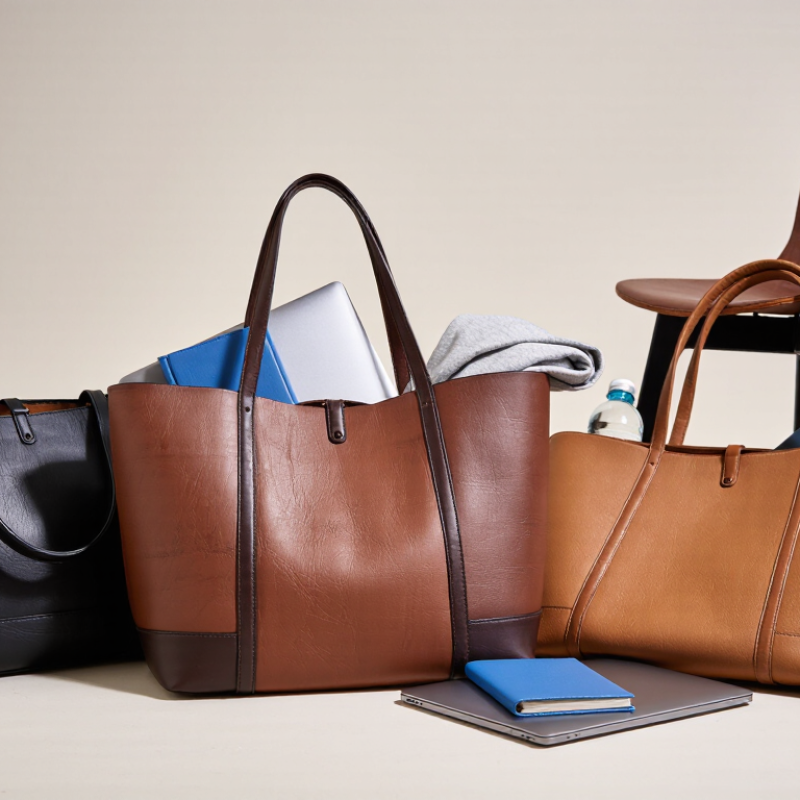
What Are Leather Tote Bags and Why Do Buyers Choose Them?

Definition and Core Features of Leather Tote Bags

A leather tote bag is a spacious carryall made from animal hide or leather alternatives. It usually has an open top, two sturdy handles, and a broad interior. Unlike a small handbag, it can hold work documents, a tablet, a water bottle, and daily essentials. The design is simple, but construction quality varies greatly.

Good leather totes often use full-grain or top-grain leather, which can develop a visible patina over time. Some use corrected leather, split leather, or coated surfaces for a smoother finish and lower price. Buyers should inspect the grain, edge painting, stitching, lining, and handle attachments. Even spacing and reinforced stress points suggest careful workmanship. A secure pocket also helps protect keys and cards.

I have found that handle length changes comfort more than expected. Short handles suit hand carrying, while longer drops work better over a coat. Weight matters too. A beautiful tote can become tiring when filled. Not always ideal. Leather may also scratch, absorb moisture, or show uneven color, especially with natural finishes. I once valued a rigid shape, then disliked how it felt against my side during travel. Practical buyers should check the bag’s empty weight, base support, closure style, and care instructions before choosing one.

Types of Leather Used in Tote Bag Construction

What Are Leather Tote Bags and Why Do Buyers Choose Them?

Types of Leather Used in Tote Bag Construction

Leather tote bags are open-top carriers made from animal hide, often chosen for structure, touch, and long service. Grand View Research valued the global leather goods market at approximately $394.12 billion in 2022. It also projected a 6.9% compound annual growth rate from 2023 to 2030. Tote bags benefit from this demand because their broad panels show leather quality clearly.

Full-grain leather keeps the hide’s natural surface, including small scars and grain variation. It usually develops a darker patina through handling. Top-grain leather is sanded lightly, creating a more uniform appearance while retaining useful strength. Corrected-grain leather receives stronger surface treatment and may feel smoother, but its finish can hide natural character. Split leather comes from lower hide layers. It is lighter and more affordable, although it generally needs careful coating. Suede uses the napped inner surface and feels soft, yet it marks easily.

Tanning also changes performance. Vegetable-tanned leather often feels firm and gains visible color variation over time. Chrome-tanned leather is commonly softer, more flexible, and resistant to water spots. Leather Naturally’s sustainability reporting identifies hides as a co-product of the food industry, though sourcing and processing still require scrutiny. No grade is perfect. A carefully finished split leather may outperform neglected full-grain leather in daily use. Buyers should inspect edge paint, stitching, lining, and handle reinforcement, not only the leather label. That detail matters.

What Are Leather Tote Bags and Why Do Buyers Choose Them? - Types of Leather Used in Tote Bag Construction

Leather Type How It Is Made Surface and Appearance Durability Maintenance Why Buyers Choose It Common Tote Bag Uses
Full-Grain Leather Made from the outermost hide layer with the natural grain largely intact and minimally corrected. Natural markings, firm structure, and a surface that can develop a patina with use. Very high when properly tanned and constructed; generally resists abrasion better than softer corrected leathers. Keep dry, wipe spills promptly, and condition occasionally with a suitable leather product. Long service life, authentic texture, and an appearance that can become richer over time. Work totes, daily carry bags, and structured bags designed for frequent use.
Top-Grain Leather Made from the upper part of the hide; the surface may be lightly sanded or corrected for a more uniform finish. Smoother and more consistent than full-grain leather, with a refined appearance. High durability with a balance of flexibility and structure. Protect from prolonged moisture and clean gently with a soft cloth. Offers a polished look while retaining the strength associated with the upper hide layer. Office totes, commuter bags, and versatile everyday handbags.
Split Leather Produced from the lower layers of a hide after the top grain has been separated. Often finished, embossed, or coated to create a more uniform texture and appearance. Moderate; performance depends strongly on thickness, finishing, and construction quality. Avoid excessive flexing, moisture, and harsh cleaning products. Can provide a leather surface at a generally more accessible price point. Light to moderate-use totes and fashion-oriented bag designs.
Suede Usually made from the flesh side of a hide or a split hide, then buffed to raise a fine nap. Soft, matte, and velvety with a directional nap that can change shade when brushed. Moderate; the open nap is more vulnerable to water, oil, and staining than smooth leather. Use a suede brush, keep away from moisture, and treat stains promptly with appropriate products. Distinctive texture, lightweight feel, and a relaxed visual character. Seasonal totes, casual bags, and designs where softness is preferred over rigidity.
Nubuck Leather Made by lightly buffing the outer grain surface to create a fine, short nap. Velvety and fine-textured, with a more delicate grain surface than smooth finished leather. High structural potential, but the exposed surface can show marks and absorb liquids easily. Apply suitable nubuck protection, brush lightly, and avoid oils or standard leather creams. Combines the stronger outer hide layer with a soft, tactile finish. Premium casual totes and bags designed around a tactile surface.
Corrected-Grain Leather The surface is buffed or treated to reduce visible imperfections, then embossed or finished. Uniform grain, consistent color, and a finish that may offer improved stain resistance. Moderate to high, depending on the remaining hide thickness and surface coating. Usually easy to wipe clean; avoid abrasive cleaners that can damage the finish. Predictable appearance and practical maintenance for everyday use. Uniformly styled work totes, travel bags, and daily-use designs.
Bonded Leather Made by bonding leather fibers or scraps with binders and forming them into sheets, often with a surface coating. Highly uniform and frequently embossed to imitate a natural leather grain. Generally lower than full-grain or top-grain leather; surface coatings may crack or wear with heavy use. Wipe gently, avoid excess moisture and heat, and do not use aggressive conditioners. Consistent appearance and a lower-cost option for occasional or light use. Light-use fashion totes and short-term accessory designs.

Note: Actual performance depends on hide quality, tanning method, thickness, lining, stitching, hardware, and the care routine used by the owner.

How Leather Tote Bags Are Designed and Made

Leather tote bags begin with a pattern, not a finished shape. Designers map the base, handles, gussets, pockets, and stitch lines on paper or digital templates. Then they choose leather by thickness, grain, flexibility, and surface condition. Full-grain leather often keeps natural marks. Those marks are not automatically defects. A practical tote needs balance. Thick hide can support a laptop, but it may feel stiff on the shoulder. Thin leather feels softer, yet it can lose shape under heavy loads. Good design weighs both needs.

Cutting requires steady pressure and careful placement. Workers align each piece with the grain when possible, reducing uneven stretching. Edges may be painted, folded, or burnished to protect the fibers. Handles receive extra reinforcement because they carry repeated tension. Small details matter. Bar tacks, strong thread, and evenly spaced stitches help prevent early failure. Some interiors use cotton or synthetic lining, depending on weight, cleaning needs, and price. Hardware should move smoothly and resist ordinary corrosion.

Before packing, inspectors check symmetry, seam strength, handle attachment, and pocket alignment. A careful maker also examines smell, loose threads, and sharp edge paint. Still, no workshop produces a flawless surface every time. A tiny wrinkle may reveal natural leather behavior rather than poor construction. That distinction deserves honest explanation. Buyers can test the bag by opening it, lifting it, and checking whether it stands comfortably. I would not judge quality from shine alone. Fit, balance, and repairable construction often matter more during daily use.

Practical Benefits and Common Uses of Leather Totes

Leather tote bags are open-top carryalls made from leather panels, handles, and reinforced stitching. Their simple shape supports many daily routines. A well-made tote can hold a laptop, notebook, water bottle, and small personal items without feeling overly formal. The material also develops a deeper surface character over time. That change is useful, but not always attractive to every buyer.

Many buyers choose leather totes for durability and structure. Firm leather helps the bag stand beside a desk instead of collapsing on the floor. Strong handles can make commuting more comfortable, especially when weight is distributed evenly. Interior pockets keep keys, cards, and chargers easier to find. In an office, a tote can carry documents and work equipment. At college, it may hold books, a tablet, and lunch. Some shoppers also use it for short trips because it looks polished without being fragile.

Leather requires practical care. Wiping away moisture quickly can reduce stains and surface damage. Direct heat may dry or distort the material. I have found that overloaded bags lose their shape faster, even when the stitching is strong. That is an easy mistake to repeat. Buyers should check handle attachment, lining quality, edge finishing, and the bag’s actual weight before purchasing. Leather is not automatically better in every situation. A lighter fabric tote may suit rainy commutes or frequent washing more effectively.

Key Factors Buyers Consider Before Choosing One

What Are Leather Tote Bags and Why Do Buyers Choose Them?

A leather tote bag is an open, structured carryall made for daily essentials. Buyers often choose it for strength, appearance, and practical capacity. A 2024 Grand View Research report valued the global leather goods market at about $468 billion in 2023. That scale reflects continuing demand for durable personal accessories, although market size alone cannot prove quality.

Buyers usually inspect the leather grain, stitching, handle attachment, and lining. A full workday can mean carrying a laptop, charger, notebook, water bottle, and small cosmetics. Thin handles may become uncomfortable quickly. A strong base also helps the bag stand beside a desk instead of collapsing on the floor. Size matters, but larger is not always better. An oversized tote can become heavy before it becomes useful.

Price is another serious consideration. Buyers compare construction rather than relying on a polished surface. They may check whether edges are sealed, hardware feels secure, and interior pockets are easy to reach. The 2024 ThredUp Resale Report projected the global secondhand apparel market could reach $350 billion by 2028. That trend encourages shoppers to consider long-term condition and resale appeal. Still, leather care is often underestimated. Scratches, rain, and uneven coloring can change its appearance. I would not promise a flawless finish; natural leather can develop marks, and some buyers may prefer that lived-in character.

What Are Leather Tote Bags and Why Do Buyers Choose Them?

Leather tote bags are spacious carryall bags made from animal hide or leather-based materials. Buyers commonly compare durability, aging appearance, softness, and care requirements before choosing a leather type.

Ratings use a general 1–5 comparison of common leather characteristics: 1 indicates a lower level and 5 indicates a higher level. Actual performance can vary with tanning, finishing, construction, and maintenance.

FAQS

What is a leather tote bag?

It is an open-top carrier made from animal hide. Its broad panels reveal texture, structure, and surface changes clearly.

Which leather keeps the most natural appearance?

Full-grain leather keeps natural scars and grain variation. It often develops a darker patina through handling.

How does top-grain leather differ from full-grain leather?

Top-grain leather is lightly sanded for a more even appearance. It still offers useful strength and durability.

Is corrected-grain leather always better?

No grade is perfect. Corrected-grain leather may feel smooth, but its finish can hide natural character.

What should buyers know about split leather and suede?

Split leather comes from lower hide layers and is usually lighter. It often depends on careful surface coating.

How do tanning methods affect a tote bag?

Vegetable-tanned leather often feels firm and gains visible color variation over time. Chrome-tanned leather is usually softer and more flexible.

How is a leather tote bag constructed?

Designers create patterns for the base, handles, gussets, pockets, and stitch lines. Workers then cut pieces and assemble them carefully.

What construction details should buyers inspect?

Check edge finishing, stitch spacing, lining, handle attachment, and pocket alignment. Bar tacks and strong thread can reduce early failure.

How can someone test a tote bag before buying?

Open it, lift it, and check its balance. Confirm that the handles feel comfortable and the bag stands properly.

Conclusion

Leather tote bags are spacious, versatile carryalls defined by their open-top structure, sturdy handles, and durable leather construction. They may be made from full-grain, top-grain, corrected-grain, or split leather, with each type offering a different balance of strength, texture, appearance, and price. Their design typically combines practical storage with simple, adaptable styling, while production involves selecting and preparing the leather, cutting panels, assembling the body, attaching handles, and adding finishing details such as linings, pockets, closures, and protective treatments.

Buyers choose leather totes for everyday convenience, long-term durability, and their ability to suit work, travel, shopping, or casual use. Before selecting one, shoppers often compare size, weight, handle comfort, interior organization, leather quality, stitching, maintenance needs, closure style, and overall construction. Personal preferences regarding appearance, budget, carrying capacity, and expected frequency of use also play an important role in finding a tote that is both functional and suitable for daily routines.

Nathaniel

Nathaniel

Nathaniel is a highly experienced marketing professional dedicated to helping customers better understand innovative products and practical industry solutions. With a strong background in market research, content strategy, product positioning, and digital communications, he brings a clear,......