
0%

Sourcing women’s leather handbags wholesale requires more than comparing catalog prices. The global handbag market was estimated at USD 78.46 billion in 2023, with Grand View Research forecasting a 6.7% annual growth rate through 2030. Bain & Company also reported that the personal luxury goods market reached approximately €362 billion in 2023. These figures suggest strong demand, but they do not guarantee safe margins for every wholesale buyer.

Quality begins with traceable leather, consistent stitching, reliable hardware, and clear production records. Ask suppliers for leather specifications, sample approvals, factory details, and testing documents before discussing large quantities. Grain texture should look natural under bright light. Edges should feel smooth, not sticky. Zippers must close without catching. Small details matter. A beautiful sample can still hide weak bulk production.

Fashion authority Coco Chanel famously said, “Luxury must be comfortable, otherwise it is not luxury.” Her principle remains useful when evaluating women’s leather handbags for wholesale. Buyers should assess weight, handle comfort, lining durability, and long-term shape retention. Supplier communication also deserves attention. Slow replies may become costly after payment. Unclear answers are warning signs.

The following seven tips examine supplier verification, leather selection, pricing, minimum order quantities, customization, inspection, and shipping preparation. Some recommendations may feel obvious. They are still easy to neglect. A perfect supplier does not exist, and a low price can create expensive problems later. Use evidence, samples, and documented agreements before committing inventory.
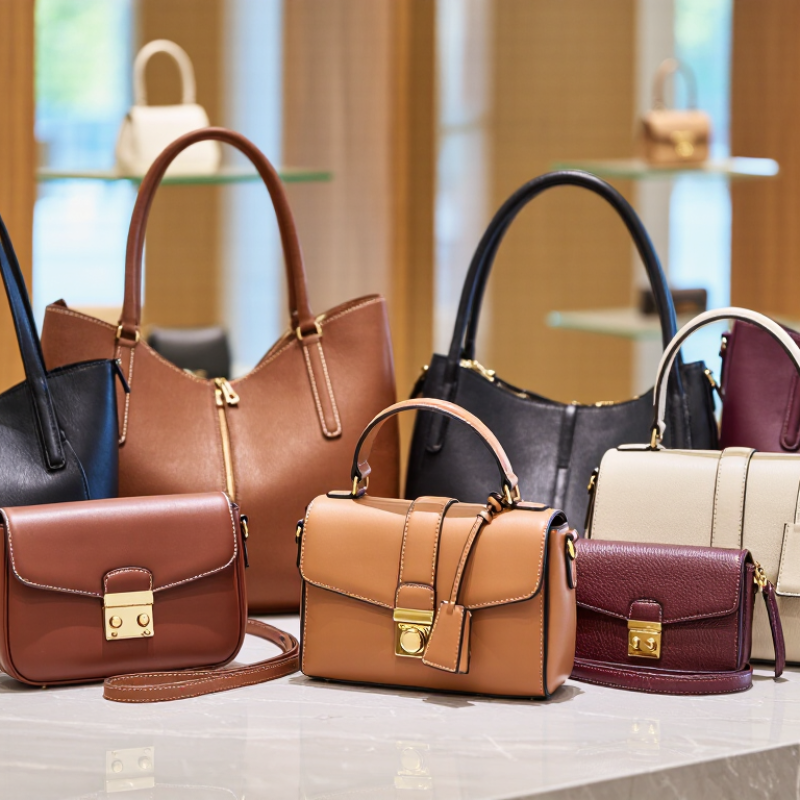
7 Tips for Sourcing Womens Leather Handbags Wholesale?

Define Your Target Market and Wholesale Handbag Requirements

Tip:
Define your target customer before contacting any handbag supplier. A young office buyer may prefer a structured black leather tote. A weekend shopper may choose a lighter crossbody style. Record age, income, shopping channel, preferred colors, and average order value. My early sourcing plans were too broad. That created slow-moving samples and unclear pricing decisions.

Grand View Research reported that the global handbag market was valued at approximately USD 67 billion in 2023. Its report also projects steady growth through 2030. Use this direction carefully, not blindly. Market growth does not guarantee demand for your exact leather handbag. Test three to five styles with clear customer groups. Check local search data, competitor prices, and return reasons before placing a large order.

Tip:
Turn customer research into precise wholesale requirements. Specify leather type, thickness, lining, hardware finish, dimensions, pocket design, packaging, and acceptable defect levels. The Leather Working Group’s guidance highlights traceability and responsible leather production as important sourcing considerations. Ask suppliers for material documentation and production samples. However, paperwork alone is not proof of consistent quality. Inspect stitching, edge paint, zipper movement, and odor personally. I would also set a realistic minimum order quantity, because a low unit price can hide expensive unsold inventory. Leave room for revision. Some requirements will change after real customer feedback.

Research Reliable Womens Leather Handbag Suppliers

Researching reliable women’s leather handbag suppliers requires more than comparing online prices.

Start by checking their business history, production capacity, workshop photos, and verified customer references. A professional supplier should explain leather grades, lining materials, hardware finishes, stitching methods, and quality-control steps clearly.

Request a physical sample before discussing large orders. Inspect the handle attachment, edge paint, zipper movement, seam alignment, and interior pockets.

Ask for the exact material description, because “genuine leather” can mean different qualities across suppliers. Small details matter.

I once trusted polished product photos too quickly. The sample looked attractive, but its metal fittings scratched within days. That mistake changed my process. Now, I test several areas and request photos during production.

Suppliers should also provide realistic minimum order quantities, lead times, packaging options, and written defect policies. Vague answers are warning signs.

Check whether the supplier can meet your target market’s product, labeling, and material requirements. Do not rely only on certificates sent by email; confirm their validity and issuing organization when possible.

A video factory tour can help, but it is not full proof. Independent inspections may be worthwhile for larger orders.

Communication reveals practical reliability. Notice response speed, technical understanding, and willingness to admit limitations. The cheapest quote may hide unstable quality or unexpected costs.

Compare at least three suppliers using the same specification sheet, then record every promise in writing. Suppliers can improve, but only when expectations are measurable.

Evaluate Leather Quality, Designs, and Product Craftsmanship

When sourcing women’s leather handbags wholesale, examine the material before admiring the silhouette. Grand View Research valued the global handbags market at USD 73.32 billion in 2023. That scale rewards consistent quality, not attractive samples alone. Check the grain, edge paint, lining, hardware, and stitching under bright light. Full-grain leather should feel dense, flexible, and naturally varied. Uniform pores may indicate heavy correction or synthetic material. Ask for leather specifications, thickness, finish, and testing records. “Genuine leather” alone says too little.

Tip: Compare three samples from the same production batch. Rub a hidden corner gently. Bend each handle repeatedly. Watch for cracking, color transfer, loose threads, or chemical smells. I have learned that polished prototypes can conceal weak reinforcement. It is an uncomfortable lesson. Inspect handle bases, zipper ends, corners, and strap attachments. Craftsmanship appears in boring places. Uneven stitch spacing often predicts returns.

Tip: Judge designs against customer use, not mood boards. McKinsey’s State of Fashion 2024 highlights value and quality as major fashion purchase concerns. Measure the bag’s weight, opening width, pocket access, and strap drop. Test it with a phone, wallet, keys, and a small notebook. Decorative hardware should not overpower daily function. Review color consistency across panels. Ask for pre-shipment inspection photos and a written defect tolerance. I would also question my own assumptions: a beautiful finish may age poorly, while a quieter design can perform better.

Wholesale Women's Leather Handbag Sourcing Benchmarks

Comparing leather thickness, seam density, and abrasion resistance helps buyers evaluate material quality and product craftsmanship.

Typical reference values: full-grain and top-grain leather generally offer higher durability, while higher stitch density can indicate stronger handbag construction. Exact specifications should be verified through supplier samples and laboratory testing.

Compare Wholesale Prices, Minimum Orders, and Shipping Terms

7 Tips for Sourcing Womens Leather Handbags Wholesale

Wholesale price alone can mislead. Compare identical leather grades, dimensions, hardware, lining, packaging, and quality standards. Grand View Research estimated the global handbag market at about $73.32 billion in 2023, with continued growth through 2030. That scale creates many suppliers, but also inconsistent quotations.

Tip 1: Request a line-by-line quotation.
Tip 2: Calculate landed cost, including sampling, inspection, freight, duties, and payment fees.
Tip 3: Compare minimum order quantities by style and color. A 300-piece MOQ may sound reasonable, but six colors can create 1,800 units. I have seen attractive prices become expensive inventory. That mistake is easy to repeat.
Tip 4: Ask whether the quote uses EXW, FOB, or DDP terms. These terms shift transport costs, customs responsibilities, and delivery risk. UNCTAD’s Review of Maritime Transport reports that over 80% of global merchandise trade by volume moves by sea, so port delays matter.
Tip 5: Confirm carton dimensions and chargeable weight.
Tip 6: Request a pre-production sample and use ISO 2859-1-based inspection sampling.
Tip 7: Add a written shipping buffer, not just the factory’s ideal lead time. A clear purchase sheet should record price validity, MOQ, payment stages, production days, shipment date, and responsibility for unexpected freight changes.

Verify Supplier Credentials and Build a Long-Term Partnership

When sourcing women’s leather handbags wholesale, supplier verification should begin before price negotiation. In my sourcing work, I request registration documents, factory addresses, product catalogs, and recent production photos. I compare each detail with public business records and shipping information. Ask for material specifications, capacity, hardware details, and quality-control procedures. Small inconsistencies matter. A polished website proves little. It is only a starting point.

Order samples from the same production line intended for bulk orders. Inspect stitching density, edge paint, lining, zipper movement, odor, and weight. Keep a dated inspection sheet with photographs. I also ask who handles final checks and how defective units are replaced. Sometimes a sample looks excellent, while the second batch reveals uneven seams. That mistake taught me to test repeatability, not only appearance. Request references from comparable wholesale buyers, where appropriate, and verify communication speed during a small trial order.

A long-term partnership needs written expectations, not friendly promises. Agree on lead times, payment milestones, packaging, acceptable tolerances, inspection access, and corrective actions. Discuss how material shortages or production delays will be reported. Reliable suppliers explain problems early. They do not hide behind vague updates. Review performance after each shipment using defect rates, delivery accuracy, and response time. I still reassess suppliers, even after successful seasons. Trust grows through evidence, but it should never replace careful review.

7 Tips for Sourcing Women's Leather Handbags Wholesale: Verify Supplier Credentials and Build a Long-Term Partnership

Tip Verification Dimension Practical Data or Benchmark Evidence to Request Warning Sign Recommended Action
1 Confirm legal registration and export capability The legal entity name, registered address, bank account name, and contract details should be consistent. Business registration document, export license where applicable, tax details, and a pro forma invoice. Different names or addresses appear across documents. Use a written purchase agreement and pay only to the verified business account.
2 Verify leather quality and material composition Full-grain and top-grain leather are different from bonded or synthetic leather; the material must match the product specification. Material specification sheet, sample approval, thickness data, and independent test reports when required. The supplier uses vague terms such as “genuine leather” without defining the leather type. Record leather type, thickness, finish, lining, and hardware in the purchase specification.
3 Assess manufacturing capacity and quality control A capable supplier should explain monthly capacity, production stages, inspection points, and subcontracting arrangements. Factory audit report, production-flow photos or video, quality-control checklist, and sample inspection record. No documented inspection process or unclear responsibility for outsourced work. Approve a pre-production sample and define acceptable defect limits before bulk manufacturing.
4 Compare MOQ, pricing, and total landed cost Wholesale MOQs commonly vary by design, color, material, and customization; freight, duties, packaging, and inspection fees affect the final cost. Tiered price list, MOQ by SKU and color, packaging specification, freight quotation, and payment terms. A low unit price excludes tooling, packaging, delivery, or quality-inspection charges. Calculate landed cost per bag and compare at least three written quotations using the same specifications.
5 Test samples for durability and appearance Check stitching, edge paint, zipper function, hardware attachment, color consistency, odor, dimensions, and load-bearing performance. Approved reference sample, measurement sheet, color standard, hardware details, and test results. The bulk sample differs from the approved sample in size, color, leather texture, or hardware. Sign off a sealed reference sample and use a pre-shipment inspection before releasing the balance.
6 Review compliance, traceability, and responsible sourcing Requirements may include chemical restrictions, product labeling, packaging rules, labor standards, and import documentation for the destination market. Material declarations, chemical test reports where applicable, origin information, audit records, and labeling artwork. The supplier cannot identify material origin or provide market-specific compliance documents. Create a destination-market compliance checklist and confirm requirements with an importer or testing laboratory.
7 Build a measurable long-term partnership Track on-time delivery, defect rate, response time, claim resolution, price stability, and repeat-order performance. Signed service terms, production schedule, corrective-action procedure, warranty policy, and quarterly performance review. Frequent unexplained delays, changing specifications, or refusal to document corrective actions. Start with a controlled trial order, set measurable KPIs, and review performance after every shipment.
Suggested supplier scorecard: Credentials 20% · Material quality 20% · Manufacturing and QC 20% · Total landed cost 15% · Compliance 10% · Delivery reliability 10% · Communication and after-sales support 5%

FAQS

How should I define my target market before sourcing handbags?

Record customer age, income, shopping channel, preferred colors, and average order value. An office buyer may want a structured black tote. A weekend shopper may prefer a light crossbody. My early plans were too broad. Clear groups make testing easier.

How many handbag styles should I test before placing a large order?

Test three to five styles with specific customer groups. Check local search behavior, competitor prices, and return reasons. Market growth does not guarantee demand for your exact design. I once trusted general trends too much. That was not enough.

What details should a wholesale handbag specification include?

State the leather type, thickness, lining, dimensions, and hardware finish. Include pocket design, packaging, labeling, and acceptable defect levels. Describe color references clearly. Vague specifications create avoidable disputes. Keep it measurable.

Why should I order physical samples from suppliers?

Photos cannot show every quality problem. Inspect stitching, edge paint, zipper movement, handle attachment, and seam alignment. Check the lining, weight, and odor too. Small details matter. A sample may look excellent but still fail during daily use.

How can I compare several handbag suppliers fairly?

Send the same specification sheet to at least three suppliers. Compare material descriptions, prices, minimum order quantities, lead times, and packaging. Record every promise in writing. Notice response speed and technical understanding. The cheapest quote may hide unstable quality.

What supplier documents and evidence should I verify?

Request registration details, factory addresses, catalogs, and recent production photos. Compare these details with public business and shipping information. Ask about production capacity and quality-control procedures. Certificates deserve verification. A polished website proves little.

How can I check whether bulk production will match the sample?

Request samples from the production line used for bulk orders. Keep a dated inspection sheet with photographs. Test repeatability, not only appearance. Ask who performs final checks. One sample is not proof.

What should a long-term supplier agreement cover?

Write down lead times, payment milestones, packaging, inspection access, and defect tolerances. Define replacement procedures for defective units. Agree how shortages and delays will be reported. Review defect rates, delivery accuracy, and response time after each shipment. Trust needs evidence.

Conclusion

Sourcing women’s leather handbags wholesale successfully begins with a clear understanding of your target customers, preferred styles, budget, quality expectations, and sales channels. Define the ideal materials, colors, sizes, functions, and seasonal trends before contacting suppliers. Then research manufacturers and wholesalers with consistent production capabilities, transparent communication, and experience serving businesses like yours. Request product samples to assess the leather’s texture, durability, stitching, hardware, lining, and overall craftsmanship rather than relying only on photographs.

When comparing suppliers, review wholesale prices alongside minimum order quantities, customization options, production timelines, packaging, and shipping terms. A low unit price may not be the best value if quality or delivery reliability is inconsistent. Before placing a large order, verify business credentials, product documentation, quality-control procedures, and payment conditions. Clear communication, written agreements, sample approval, and trial orders can reduce risks and establish realistic expectations. By choosing a dependable supplier and maintaining regular communication, you can build a long-term partnership that supports consistent quality, efficient inventory planning, and sustainable business growth.

Evelyn

Evelyn

Evelyn is a dedicated marketing professional with a strong understanding of the company’s products, customers, and industry trends. With a thoughtful, research-driven approach, she transforms complex product information into clear, practical, and engaging content that helps readers make informed......