
China remains an important sourcing destination for business bags, but choosing a factory takes more than comparing prices. Buyers need to assess leather selection, pattern accuracy, stitching, hardware, and production consistency. A sample may look sharp under showroom lights. The real test comes after repeated use.
Market data offers useful context, with an important caveat. Grand View Research estimated the global leather goods market at USD 468.49 billion in 2023 and projected growth from 2024 to 2030. That figure covers leather goods broadly, not men's leather briefcases alone. It signals a substantial category, but it cannot confirm a supplier’s quality or reliability. Details matter.
This guide introduces ten Chinese manufacturers for buyers evaluating men's leather briefcases. It focuses on practical sourcing questions: product range, customization, materials, manufacturing experience, and communication. Ask how suppliers verify leather consistency, inspect seams, and protect briefcases during packing. Request recent samples and clear production specifications. Then compare what arrives with what was promised. Not always easy. Factory claims can sound alike, and a polished sample may not reflect bulk production. Treat this list as a starting point, not an endorsement; verify current capabilities directly before placing an order.
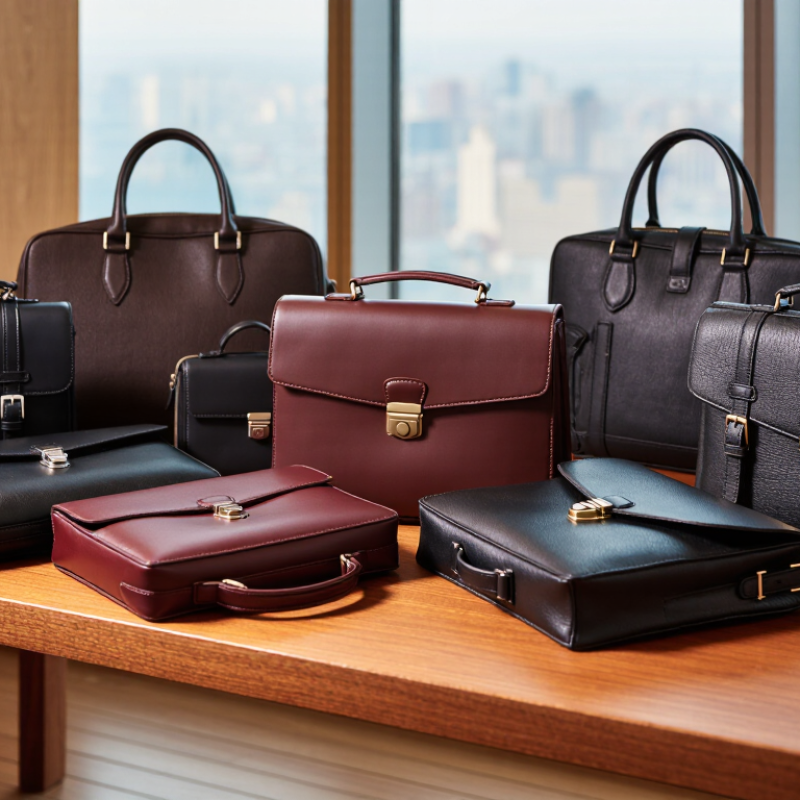
Definition and Scope of Men’s Leather Briefcase Manufacturing in China
In China, men’s leather briefcase manufacturing covers more than stitching leather panels together. It may include pattern development, leather selection, cutting, skiving, sewing, edge finishing, hardware fitting, and final inspection. Factories may produce under buyer specifications, develop designs jointly, or sell finished goods through export partners. These roles are not interchangeable. A trading office may coordinate orders without operating a production line.
The UN Comtrade Harmonized System places briefcases with leather outer surfaces under HS 4202.11, alongside several other travel and business cases. This helps define the product for trade analysis, but the code does not identify the actual factory or verify material quality. The World Footwear Yearbook 2024 reports 22.4 billion pairs of footwear produced worldwide in 2023. That figure signals the scale of Asia’s broader manufacturing ecosystem, not briefcase output. The distinction matters. Briefcases require different tooling, construction skills, and quality checks.
Tip: Ask suppliers for a process map, material specifications, and an audit showing where cutting and sewing take place. A polished sample can hide production gaps. This boundary is messy, and public trade data rarely shows who made each item.
Manufacturing scope overview; the numbered rows describe industry dimensions and are not a ranking of companies.
| No. | Dimension | Definition and Scope | Common Manufacturing Considerations |
|---|---|---|---|
| 1 | Product Definition | A men's leather briefcase is a structured or semi-structured work bag designed to carry documents, a laptop, and everyday business items. | Product specifications commonly define dimensions, capacity, handle and strap configuration, closure type, and intended use. |
| 2 | Leather Materials | Depending on the product specification, exterior panels may use full-grain, top-grain, or split leather. Leather is a natural material, so grain, texture, and color can vary. | Material selection considers appearance, thickness, flexibility, surface finish, durability, and consistency between production batches. |
| 3 | Alternative and Supporting Materials | Briefcases may incorporate textile or synthetic linings, reinforcement materials, foam, edge coatings, thread, and non-leather components. | Material compatibility affects structure, weight, stitching, finishing, and the product's care requirements. |
| 4 | Product Styles | Common formats include flap-over cases, zip-top cases, portfolio-style briefcases, and briefcases with detachable shoulder straps. | Pattern design and internal layout are adapted to the selected format and the intended contents, such as documents or a laptop. |
| 5 | Construction and Assembly | Production typically involves pattern development, cutting, skiving or edge preparation, stitching, component assembly, and finishing. | Construction methods and reinforcement points are selected according to the design, material thickness, and expected use. |
| 6 | Hardware and Closures | Typical components include zippers, buckles, magnetic closures, locks, rings, adjusters, and handle fittings. | Hardware specifications cover dimensions, attachment method, finish, function, and compatibility with the bag design. |
| 7 | Interior Organization | Interior features may include a main compartment, document sections, accessory pockets, pen loops, and a padded laptop compartment. | Compartment dimensions and padding should be defined against the intended contents; laptop fit should be checked using specified device measurements. |
| 8 | Quality Inspection | Inspection can cover material appearance, dimensions, stitching, seams, edge finishing, hardware operation, lining, and overall assembly. | Acceptance criteria and sampling plans should be agreed in the product specification or purchase agreement; no single inspection method applies to every order. |
| 9 | Customization and Order Specifications | Manufacturing orders may specify size, color, leather selection, lining, hardware, pockets, packaging, and approved samples. | Clear drawings, material descriptions, tolerances, and sample approval help align production with the buyer's requirements. |
| 10 | Packaging and Export Preparation | Finished products may be individually protected and packed for domestic distribution or export, according to the order's packaging requirements. | Packaging, carton markings, shipping documents, and destination-market requirements should be confirmed for each shipment. |
Look for experience with structured bags, reinforced handles, even stitching, clean edge finishing, and secure hardware. Ask for written material and inspection details.
No. Request a sample made to your specifications, then compare it with written measurements. A polished sample can fool me, too.
Fill it with a laptop and papers. Test the handle, zipper, pockets, and how it stands on a desk. Small details matter.
Ask how materials are graded and how color differences are checked between batches. Natural variation may occur, so agree on acceptable differences.
Ask who checks stitching, zippers, lining, and dimensions before shipment. Request inspection records and confirm defect-handling terms in writing.
No. A short visit may not show performance during a busy run. Compare samples with production records, or consider an independent inspection.
Some makers focus on padded laptop compartments, lightweight commuter designs, small-batch samples, or high-volume orders. Others offer hybrid materials or packaging options.
Not directly. The cited figures cover the wider leather-goods market, which includes many product types. Briefcase sales are not isolated.
This article explores China’s men’s leather briefcase manufacturing industry, defining the products and production activities covered while outlining the sector’s materials, manufacturing methods, and major production regions. It also explains how buyers can assess manufacturers based on factors such as craftsmanship, material selection, production capacity, quality control, communication, and export experience.
The article profiles ten Chinese manufacturers and compares their product ranges, customization options, quality standards, and ability to serve international markets. Together, these profiles offer a practical overview of the choices available to businesses seeking men's leather briefcases, helping readers understand how to evaluate suppliers and identify those whose capabilities and products best match their requirements.