
Leather messenger bags remain practical products, but choosing a manufacturer involves more than comparing prices. The global leather goods market was valued at approximately US$468.5 billion in 2023, according to Fortune Business Insights. Its report forecasts continued growth through 2032. This figure covers a broad category, not messenger bags alone, so it should not be treated as proof of demand for one specific style. Still, it shows why buyers pay close attention to material quality, product development, and dependable supply.
China offers a wide range of bag-making partners, from workshops focused on small runs to factories equipped for larger orders. Differences matter. A smooth zipper, even stitching around a flap, and a strap that holds its shape can reveal more than a polished catalog photo. When reviewing top leather messenger bag manufacturers in China, buyers should check leather specifications, sample consistency, production capacity, quality-control procedures, and communication practices. Ask how the factory handles color variation and edge finishing. Request a sample before approving a bulk order.
There is no perfect shortlist. A capable supplier may still be a poor fit for a particular design, budget, or order size. Treat market reports as context, not as supplier endorsements, and verify claims directly with manufacturers. That extra work can feel slow. It is often worth it.
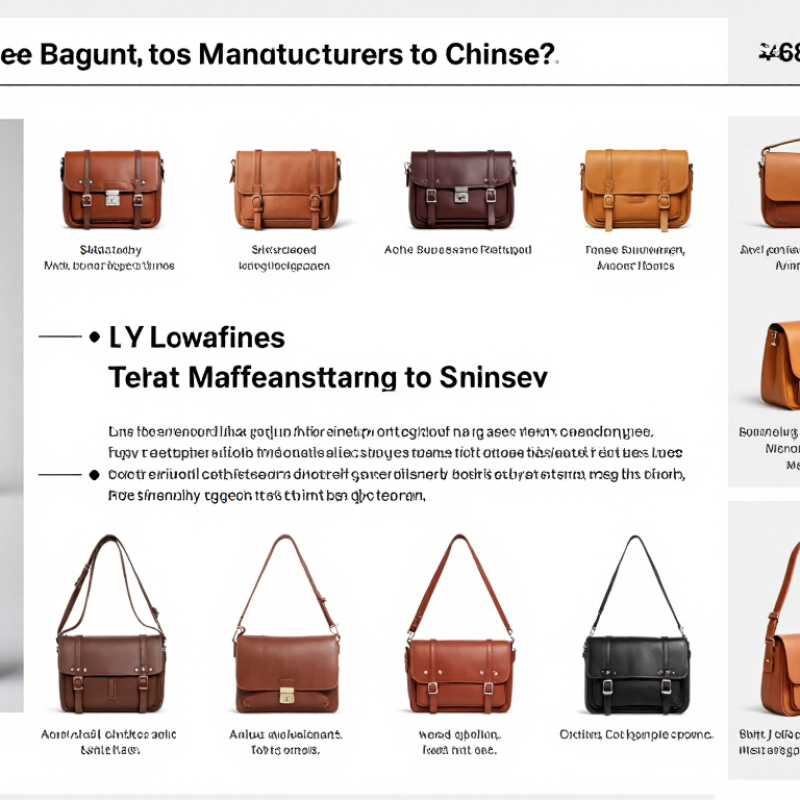
China’s leather messenger bag industry is built around a broad network of tanneries, material traders, hardware suppliers, and cut-and-sew workshops. The World Footwear Yearbook 2024 reports that Asia produced about 88% of global footwear in 2023, with China the largest producer. Footwear is not bag production, so this figure is only a supply-chain indicator. Still, it reflects the region’s manufacturing depth and access to components.
For buyers, production quality starts with material checks. A factory may inspect leather thickness, surface marks, color consistency, and flexibility before cutting panels. Then workers skive seams, stitch stress points, and apply edge paint. Small details matter. A strap anchor can look neat yet fail under repeated weight. Hardware finish also varies between sample and bulk orders, so written specifications and pre-shipment inspections help reduce surprises.
China’s manufacturing strength does not guarantee uniform results. Leather can differ between batches, and hand-finished edges need close review. That part is easy to underestimate. The World Footwear Yearbook measures footwear, not messenger bags; public data on this specific category is limited. Buyers should therefore assess factories through material records, sample workmanship, production capacity, and documented quality checks, rather than relying on broad national output figures alone.
| Industry Dimension | Typical Manufacturing Practice | What Buyers Should Verify |
|---|---|---|
| Product scope | Messenger bags are commonly made with a main compartment, shoulder strap, closures, and internal or external pockets. Construction and details vary by design and intended use. | Confirm finished dimensions, pocket layout, strap adjustment range, closure type, and whether a laptop sleeve or other features are included. |
| Leather materials | Bag makers may work with full-grain, top-grain, or split leather. These terms describe different parts or treatments of hide; appearance, durability, and price can vary. | Request a material specification that identifies the leather type, thickness, finish, color, and any lining or backing. Approve a physical sample before bulk production. |
| Alternative materials | Some designs use synthetic materials such as polyurethane-coated fabric or PVC. These are not animal leather, even when marketed with a leather-like appearance. | Make the material description explicit in the purchase specification, labeling, and product documentation. |
| Typical production steps | Production can include material inspection, pattern cutting, skiving, stitching, edge finishing, hardware installation, assembly, and final inspection. | Ask which steps are performed in-house and which are subcontracted, and agree on inspection points before production begins. |
| Construction and durability | Stitching, reinforcement, edge treatment, lining, and hardware all influence a bag’s performance. Stress areas commonly include strap attachments, handles, and closure points. | Check seam consistency, reinforcement at load-bearing points, hardware operation, edge finish, and performance against the intended use. |
| Sampling and customization | Buyers can generally specify patterns, colors, linings, pockets, hardware, and packaging. Custom work requires approved specifications and samples to reduce interpretation differences. | Approve a pre-production sample and retain the final specification, color references, measurements, and approved material swatches. |
| Quality control | Quality checks may cover dimensions, appearance, stitching, function, material consistency, and packaging. The exact inspection plan depends on the buyer and product requirements. | Set measurable acceptance criteria, defect classifications, sample size, and inspection timing in writing rather than relying on a general promise of “quality control.” |
| Chemical and product compliance | Requirements depend on the destination market and product. For example, EU REACH rules restrict certain chemicals; applicable obligations should be assessed for the specific materials and supply chain. | Identify destination-market requirements and request relevant, current test reports for the exact materials and product. Confirm that reports match the production specification. |
| Environmental and facility claims | Leather supply-chain standards and facility-management certifications have different scopes. Leather Working Group audits relate to leather manufacturing and sourcing; ISO 9001 concerns a quality-management system. | Check the issuing organization, scope, site, validity, and product relevance of any certificate or audit claim. Do not assume a facility credential certifies every finished bag. |
| Supplier selection | Manufacturers differ in product specialization, leather sourcing, development support, production arrangements, and export experience. There is no single capability profile that applies to every supplier. | Compare verified samples, factory or production-site information, communication, traceability, production capacity, and written commercial terms. |
| Lead time and order planning | Production timing depends on material availability, sampling and approval cycles, order complexity, and factory scheduling. A universal lead time cannot be inferred without a specific order plan. | Request a schedule covering material confirmation, sample approval, production, inspection, and dispatch; clarify how changes affect the timeline. |
This table summarizes common industry considerations, not a ranking or endorsement of individual manufacturers. Capabilities and requirements should be confirmed with each prospective supplier for the specific product and destination market.
Designers begin with its intended use, such as commuting or carrying documents. They sketch the shape and test proportions with a paper or fabric mock-up.
Leather affects a bag’s weight, structure, color, and cost. A heavier hide may feel sturdy, but could tire the shoulder during a long commute.
Check whether the flap opens smoothly and a tablet fits without stretching the gusset. Test the strap with weight, too. A pretty sample can still hurt.
Workers inspect hides, lay out patterns, cut panels, skive edges, stitch pieces, fit hardware, and apply edge paint. Small placement errors can make pockets bulge.
Check dimensions, stitch consistency, hardware function, and color transfer. Record the results. A clean sample does not guarantee years of wear.
Ask whether leather selection, cutting, and stitching happen in-house. Inspect corners, strap attachments, even seams, smooth edges, and a lining that sits flat.
Request a written specification sheet, sample approval steps, and clear terms for material substitutions. If the first sample differs, ask for another.
Compare the factory’s capacity with the order size and deadline. Review sample quality, quoted lead time, and defect-handling terms side by side.
No. Unclear costs may appear later. Ask practical questions and look for replies with measurements or photos; a video walkthrough or independent inspection may help.
China’s leather messenger bag manufacturing industry combines traditional craftsmanship with modern production methods, serving buyers with a wide range of materials, styles, and customization options. This overview explains how leather messenger bags move from initial design and material selection through pattern making, cutting, stitching, hardware installation, and quality checks. It also outlines the factors that can affect a bag’s durability, appearance, comfort, and suitability for different markets.
To evaluate potential manufacturers, buyers can compare production capabilities, experience, communication, sample quality, customization support, and quality-control procedures. The article also introduces the types of suppliers found in China’s manufacturing sector and offers practical ways to compare them. Reviewing business credentials, requesting product samples, clarifying specifications, and confirming production details can help buyers make informed supplier choices and establish clear expectations before placing an order.