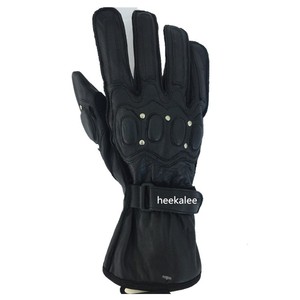

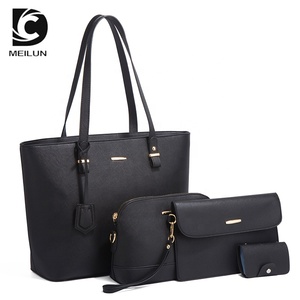
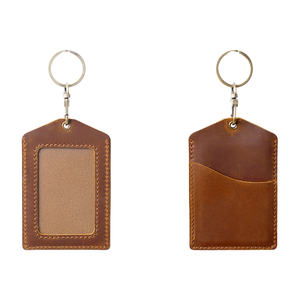
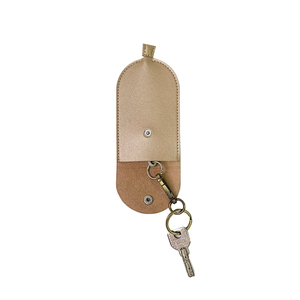
From electromagnetic-shielded EDC cardholders to high-tensile cowhide leather travel articles, browse our core production lineup designed for enterprise private-label collections.
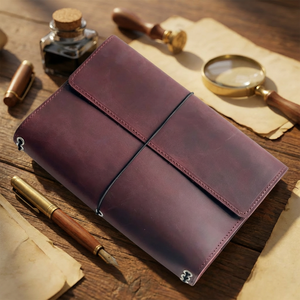
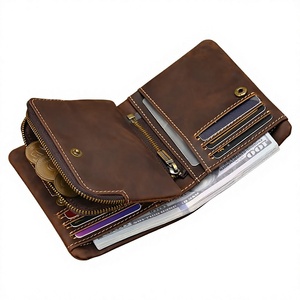
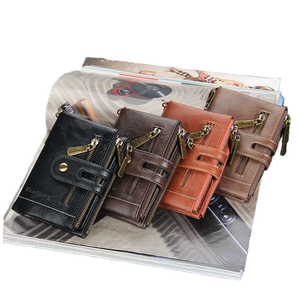
High-reliability RFID leather wallets demand zero signal bleed-through combined with supple leather hand-feel. Here is how our OEM facilities manage electromagnetic barrier integration without compromising edge-finishing or flexibility.
Our inner composite weaves employ vacuum metalized nickel-copper polyester mesh delivering 65dB to 85dB attenuation across the 10MHz–3GHz spectrum. This shields high-frequency payment cards running ISO/IEC 14443 Type A/B while permitting low-frequency 125kHz door access cards when engineered into multi-zoned configurations.
Traditional RFID lining introduces card crunch and inter-layer separation over prolonged mechanical flexing. We utilize thermo-setting waterborne polyurethane adhesives applied via micro-roller presses, preserving leather grain flexibility down to -20°C without crack propagation or acoustic crinkle noise during daily use.
Incorporating metallic barrier textiles increases perimeter bulk. Our computer-guided skiving machinery planes full-grain cowhide edges to 0.45mm tolerances, allowing our operators to wrap and stitch turned-edge card slots without visible bulge, ensuring sleek EDC profiles aligned with luxury European leathergoods standards.
For procurement directors, brands, and retail merchandisers, sourcing RFID leather accessories requires planning for changing consumer habits, digital travel ecosystems, and strict legislative frameworks.
Global retail mandates (such as the EU Deforestation Regulation) require end-to-end paddock-to-product traceability. B2B buyers are shifting orders toward Leather Working Group (LWG) Gold-rated tanneries offering chrome-free (aldehyde or vegetable tanned) substrate leathers paired with biodegradable RFID protective interlinings.
Traditional bulky bifold demand is stabilizing while demand for ultra-compact, MagSafe-compatible pop-up cardholders is expanding at a 14.8% CAGR. Wholesale buyers are ordering wallets equipped with calibrated NdFeB magnetic arrays that prevent card stripe demagnetization while preserving RFID Faraday protection on exterior faces.
Consumers require signal protection for sensitive 13.56 MHz EMV chips, but want frictionless pass-through scanning for 125 kHz transit and corporate building fobs. The next sourcing wave focuses on wallets with engineered directional shielding pockets, enabling "tap-and-go" convenience on one exterior face while locking down the inner card stack.
Operating as a primary manufacturer and exporter with second-generation leadership, our facilities unite century-old artisan leather tooling with automated precision cutting and ISO-governed supply chain security. We work as a direct extension of your brand's technical design team.
Every square foot of cowhide, crazy horse, or pull-up leather is sourced from environmentally responsible tanneries, ensuring zero restricted substances (REACH compliant).
Our manufacturing floor enforces transparent labor practices, safe working conditions, fair compensation, and zero environmental effluent release without treatment.
Equipped with computerized laser cutting tables, pneumatic embossing presses, and automated stitching stations capable of scaling rapidly to meet major seasonal launch dates.
Clear, technically sound answers to help procurement managers evaluate product quality, testing standards, and order requirements.
Our standard RFID blocking composite fabric is calibrated specifically to attenuate the 13.56 MHz frequency spectrum, which governs modern NFC protocols, ISO/IEC 14443 Type A and B cards, Visa PayWave, Mastercard PayPass, American Express ExpressPay, and biometric e-passports. We also offer military-grade multi-layer coatings capable of broadband shielding ranging from 125 kHz (low frequency) up to 3000 MHz (UHF tracking and cellular bands) upon OEM tech-pack request.
We execute a dual-stage quality control process: First, raw shielding textiles undergo lot-level attenuation verification using RF spectrum analyzers and signal generators inside a controlled Faraday chamber to confirm minimum 60dB attenuation. Second, during final finished-goods QA, random inline units are tested directly with commercial 13.56 MHz point-of-sale terminals and high-gain NFC readers to confirm zero handshake reception across all card slots and exterior pockets.
Inferior suppliers often use low-cost aluminum foils that create a crisp, noisy hand-feel and crack over time. We eliminate this issue by using ultra-thin, vacuum-deposited copper-nickel woven microfiber linings that measure less than 0.08mm in thickness. Integrated with flexible polyether adhesives, our shielding layer is undetectable to the end customer, preserving the natural drape, soft hand-feel, and quiet flexibility of full-grain cowhide.
For custom OEM/ODM designs using in-stock leathers and existing silhouettes, our standard MOQ starts at 300 to 500 units per colorway. Fully customized hardware, custom-dyed pantone leathers, or bespoke structural dies typically require 500 to 1,000 units. Prototype samples based on your CAD drawings or physical reference units are ready in 5 to 7 business days, with complete technical tech-pack feedback provided within 48 hours of initial review.
Our supply chain complies with strict international retail guidelines. All hides are processed through Leather Working Group (LWG) certified tanneries, ensuring rigorous management of water usage, waste treatment, and chemical safety. Our leathers pass third-party testing (SGS, TÜV, or Intertek) for REACH Annex XVII, California Proposition 65, azo dyes, formaldehydes, and heavy metal concentrations (hexavalent chromium Cr VI < 3ppm).
Request custom leather swatch cards, review detailed RFID test reports, or schedule a technical review with our production engineers for your upcoming season.