
Explore our custom OEM & private label collections constructed from certified top grain cowhide, full grain leathers, and precision-engineered metal hardware.
Years Heritage (Est. 1996)
Monthly Unit Capacity
Certified Tannery Supply
Ethical Social Audit Standard
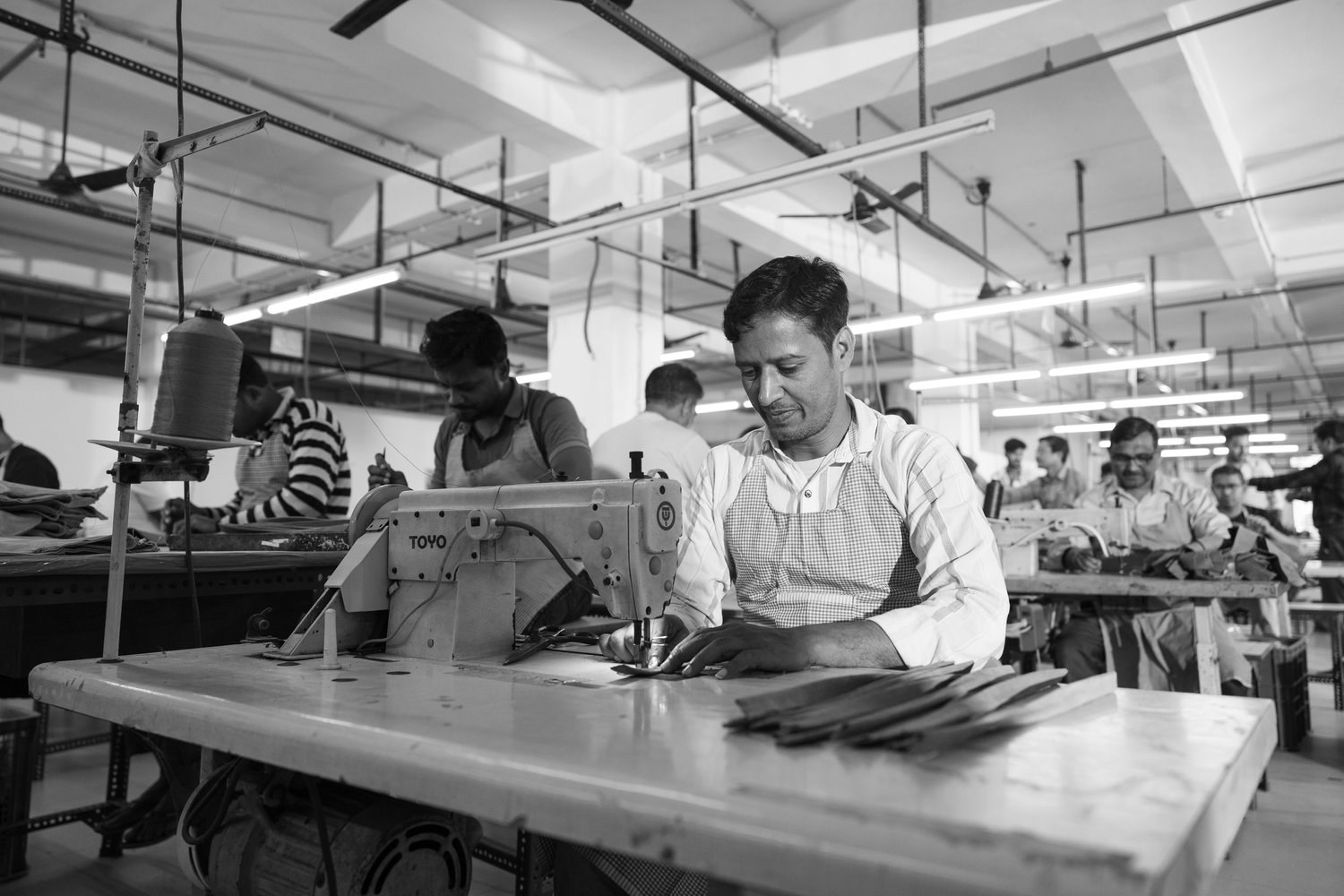
In the competitive landscape of international leather manufacturing, distinguishing genuine high-performance Top Grain Leather from inferior split leather or degraded bonded variants requires uncompromising rigor in raw material grading, chrome-free tanning capability, and microscopic edge painting discipline.
Operating under strict SMETA pillar audits and partnering with certified LWG tanneries, our manufacturing baseline guarantees traceable provenance, defect-free yield rates exceeding 98.4%, and automated skiving accuracy down to ±0.05mm.
Strategic guidance for procurement directors, product developers, and supply chain executives seeking sustainable cost performance and regulatory safety.
Global regulatory bodies, including the EU's Digital Product Passport (DPP) framework, now mandate complete farm-to-hanger visibility. Brands sourcing top grain leather must ensure their China manufacturers provide clear chain-of-custody documentation tracing hide origin back to certified slaughterhouses, eliminating deforestation linkages.
The industry is rapidly shifting away from standard chrome tanning toward synthetic aldehyde-free, zeolite-based, and vegetable-tanned hybrids. These formulations maintain the supple drape, tensile shear resistance, and lightfastness of top grain leathers while drastically curbing effluent chemical oxygen demand (COD).
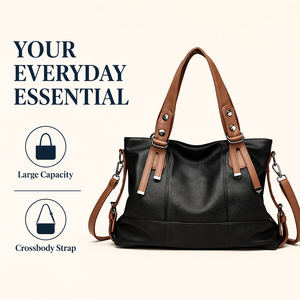
Modern consumers demand lightweight everyday totes, weekender duffels, and structural crossbodies without sacrificing the tactile luxury of full cowhide. Manufacturers are engineering split-lamination techniques and microfiber reinforcement backings that drop overall tare weight by up to 25% while retaining burst strength.
The rigid paradigm of 1,000-piece minimum order quantities (MOQs) is yielding to agile cellular manufacturing. Tier-1 China factories utilize digital cutting machines and automated color matching to allow high-end fashion brands to run seasonal capsule collections with initial MOQs of 100-300 units per colorway.
Beyond the raw leather shell, top-tier international luxury houses demand zinc and brass hardware cast from recycled alloys, accompanied by OEKO-TEX Standard 100 certified interior lining twills and organic cotton dust bags, aligning the complete product matrix with corporate ESG targets.
High-value top-grain goods now feature micro-encapsulated RFID and NFC chips embedded directly into the leather lining or structural reinforcement layers, bridging the physical product directly to consumer digital authentication and brand warranty ecosystems seamlessly.
For wholesale sourcing specialists, terminology confusion can lead to massive pricing discrepancies and downstream customer dissatisfaction. Understanding the histology and processing stages of bovine hide is critical when specifying production parameters with our China manufacturing facility.
A raw cowhide measures between 4.5mm and 6.0mm in total thickness. The uppermost stratum, known as the grain layer or papillary layer, features dense, interconnected collagen bundles that confer maximum puncture resistance, tensile stamina, and breathability. Full Grain Leather keeps this layer completely intact, preserving original natural scars, pores, and variations.
Top Grain Leather, conversely, gently buffs away the outermost micron layer of superficial blemishes. It is then treated with a microscopic protective coat or an ultra-fine mechanical embossing pattern (such as pebbled, caviar, or saffiano grains). This process preserves over 90% of the collagen fiber tensile integrity found in full grain, while providing brand buyers with two monumental commercial advantages: absolute color uniformity across thousands of production units and enhanced stain and water resistance for daily consumer durability.
In global retail semantics, lower-grade products labeled simply as "Genuine Leather" often incorporate the deeper, fibrous corium split. These split layers lack the dense epidermis collagen matrix, forcing inferior factories to apply thick polyurethane (PU) films to mimic surface grains. Over prolonged flexing cycles, this synthetic bonding separates, leading to cracking, peeling, and edge degradation. Our facility specializes in legitimate upper-stratum Top Grain and Full Grain hides, guaranteeing products that age gracefully, forming an authentic patina over decades of consumer use.
To ensure total suitability for demanding global markets (including North America, the UK, Germany, and the Asia-Pacific region), every production batch undergoes standardized laboratory testing:
| Test Parameter | Standard Protocol | Our Factory Threshold | Sourcing Impact |
|---|---|---|---|
| Flex Resistance | ISO 5402 / Bally Flex | > 50,000 Cycles Dry / 20,000 Wet | Zero finish cracking on bag stress points |
| Tear Strength | ISO 3377-2 (Baumann) | ≥ 40 N/mm thickness | Resists handle pull-out under heavy payloads |
| Color Fastness (Rub) | ISO 11640 (Veslic) | Dry 500 rubs: Grade 4-5 / Wet: Grade 4 | Prevents color transfer onto light apparel |
| Hardware Plating Adhesion | ASTM B117 (Salt Spray) | 48 Hours Neutral Mist | No tarnish or oxidation in humid shipping containers |
Clear answers covering minimum order quantities, compliance protocols, sampling lead times, and private label customization.