
Benchmarked against rigorous global standards including REACH, RoHS, and SMETA-audited workshop compliance. Discover scalable contract manufacturing for premium bespoke leatherware.

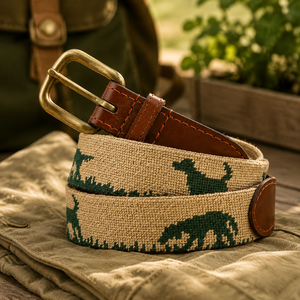
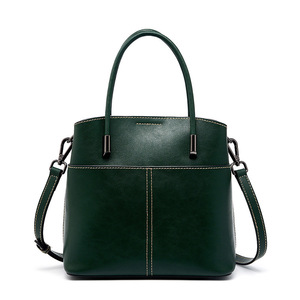
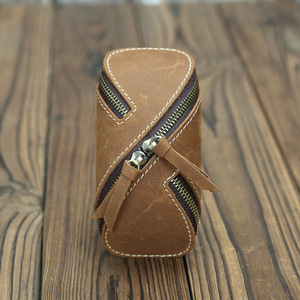

High-precision finished goods throughput across bags, SLGs & belts
Full traceability, eco-tannin extraction & zero chromium runoff
Certified labor safety, environmental management & ethical trade
Established legacy supplying premier European & North American brands
Vegetable tanning (Veg-Tan) represents the historical pinnacle of leather craftsmanship, replacing heavy metal chromium salts with natural organic tannins derived from mimosa, chestnut, quebracho, and tara pods.
Unlike rapid chrome tanning which stabilizes collagen in 24 hours, authentic vegetable tanning demands a 30 to 60-day immersion cycle in progressively concentrated tannin baths. The plant polyphenols bind to the collagen amine groups via hydrogen bonding, imparting an exceptionally tight grain cross-section, high tensile strength (>25 N/mm²), and unprecedented dimensional stability.
This molecular density prevents edge fraying during hand skiving, burnishing, and mechanical beveling, making it the definitive grade for luxury luggage, rigid structured totes, and bespoke equestrian-grade belts.
The hallmark of premium full-grain vegetable tanned hide is its photo-reactive surface. Exposed to environmental UV rays, ambient oxidation, and natural sebum from daily interaction, the unsealed vegetal surface undergoes chemical maturation, evolving from pale bisque into deep honey and rich caramel tones.
For high-end fashion houses, this self-patinating capacity delivers a distinctive tactile narrative that non-biodegradable synthetic PU and chrome leathers cannot replicate, justifying luxury retail price points.
Global supply chains face intensifying customs scrutiny regarding extractable hexavalent chromium (Cr VI)—a recognized carcinogen formed during improper chrome leather finishing. Our vegetable-tanned hides are tanned strictly using 100% heavy-metal-free plant formulations.
Every bulk lot conforms to EU REACH Annex XVII regulations, California Proposition 65 thresholds, and CPSIA requirements for small leather goods, ensuring seamless transatlantic logistics clearance without regulatory hold-ups.
How progressive procurement heads and luxury brand developers are navigating compliance, technological convergence, and sustainability mandates over the next decade.
The European Union's Ecodesign for Sustainable Products Regulation (ESPR) is accelerating the demand for end-to-end traceability from slaughterhouse to finished accessory. Modern procurement teams increasingly mandate that suppliers furnish LWG tannery verification numbers, livestock origin geolocations, and upstream chemical manifests.
Our integrated inventory management supports batch-level serialization, giving private label brands the transparent chain of custody necessary to meet future DPP compliance effortlessly.
While traditional pure vegetable leather is prized for rigidity and tooling, contemporary consumer collections demand lightweight drape, supple hand-feel, and scratch resistance. The industry is seeing rapid adoption of "wet-white" and vegetable-synthetic hybrid retannages.
By blending chestnut tannins with bio-based syntans and natural fats, we achieve the buttery temper required for unstructured slouch totes and women's crossbody bags while retaining full biodegradability credentials.
Tannery water consumption has historically presented significant environmental overhead. Forward-thinking suppliers have transitioned to automated drum processing equipped with membrane bioreactor (MBR) water recycling systems.
Our contracted tanneries reclaim upwards of 75% of process effluent, reducing COD and BOD emissions to well below statutory thresholds, providing brand partners with concrete ESG reporting metrics.

Founded on decades of precision leather manufacturing, our facility pairs traditional benchwork—such as edge creasing, saddle stitching, and manual beveling—with modern computerized hydraulic clicker presses, laser cutting, and skiving automation.
Every piece that exits our assembly line reflects calibrated millimeter tolerances. From reinforcement placement inside structured gussets to edge paint application that withstands 5,000 Bally flex cycles, our engineering guarantees that your private label line stands the test of high-frequency consumer handling.
Detailed answers addressing minimum order quantities, compliance protocols, leather grading, and production lead times.
Our baseline MOQ for custom OEM leather goods typically begins at 100 to 300 pieces per style/colorway, depending on hide availability and custom hardware requirements. For stock tannery colors and standard silhouettes, flexible lower thresholds can be accommodated for market testing phases.
Vegetable tanned leather carries approximately a 20% to 40% raw material premium over standard chrome-tanned crusts. This differential stems from prolonged tanning periods (weeks versus hours), extensive natural plant tannin consumption, and the requirement for higher-grade raw hides with minimal natural grain defects.
Yes. While natural untreated veg-tan is pale cream, we execute aniline, semi-aniline, and pigmented drum dyeing to match your brand's Pantone standards. Note that because plant tannins interact organically with light, pure aniline finishes will exhibit subtle, authentic tonal nuances across different hide cuts.
First-round physical sample prototypes and pattern development require 7 to 12 business days upon receipt of approved tech packs. Full-scale bulk manufacturing cycles generally span 30 to 45 calendar days following sample sign-off, supported by our robust monthly capacity of 60,000 units.
We work under strictly binding bilateral Non-Disclosure Agreements (NDAs). Custom master patterns, private-label brand debossing dies, and hardware molds remain the exclusive proprietary property of the ordering client and are permanently secured against catalog distribution or unauthorized replication.
Our quality assurance department operates under AQL 1.5 / 2.5 (Acceptable Quality Limit) standards. Every batch undergo rub-fastness testing (Veslic), seam tensile load analysis, zip cycle fatigue tests, and hardware corrosion salt-spray evaluations (ASTM B117) prior to shipping clearance.
Direct tannery sourcing, full tech pack prototyping, LWG/SMETA compliance documentation, and predictable large-scale contract manufacturing. Request our comprehensive materials matrix and master product catalog today.