
From full-grain luxury backpacks and structured business bags to precision-finished small leather goods (SLG) and full-grain cowhide belts. Every article is engineered to comply with rigorous REACH, CA Prop 65, and international luxury retail standards.
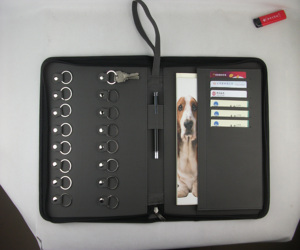
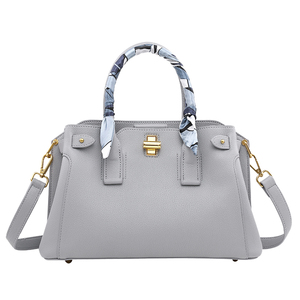
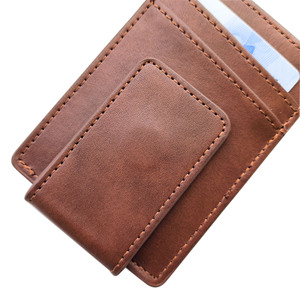
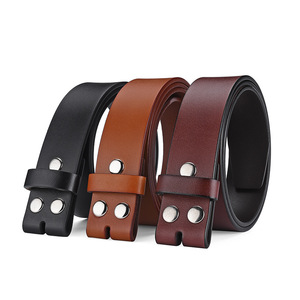
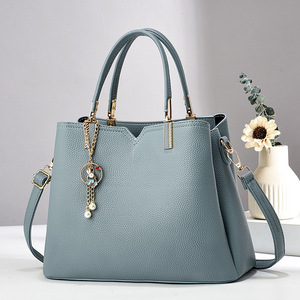
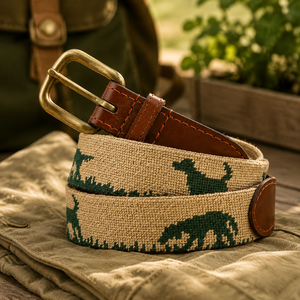
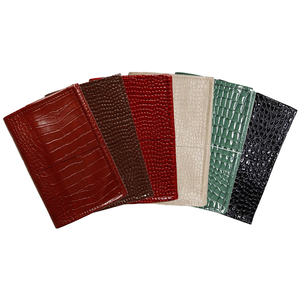
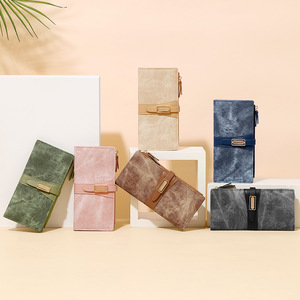
Combining three decades of leathercraft mastery with rigorous modern quality control frameworks. We operate as an end-to-end original equipment manufacturer (OEM) and private-label exporter, empowering European, North American, and Asia-Pacific lifestyle, outdoor, and luxury leather brands.
Continuous contract manufacturing and global export since 1996.
High-capacity production across leather backpacks, bags, and SLGs.
Tannery compliance under Leather Working Group environmental audits.
Fully certified labor standards, health, safety, and business ethics.
Founded as a female-led, second-generation manufacturing enterprise, our facility merges artisanal bench-craft with standardized industrial output. We oversee every stage from initial raw pelt grading to pattern digitizing and final boxing.
Our raw leather supply chain is strictly tied to tanneries holding Silver or Gold ratings from the Leather Working Group (LWG). Every hide batch undergoes testing for Hexavalent Chromium (Cr VI), Azo dyes, and lead content to ensure seamless passage through EU REACH and US California Proposition 65 regulations.
As a government-recognized exporter, we operate routine shipping pipelines across the United States, Canada, the United Kingdom, Germany, the Netherlands, Scandinavia, Japan, and Australia. We handle full container loads (FCL), consolidated LCL, and rapid DDP/FOB logistics with precision HS classification (HS 4202.92).
The international luxury and outdoor backpack market is experiencing profound structural transformations driven by corporate sustainability directives, digital supply chain traceability, and raw material volatility. Below is an authoritative breakdown for chief sourcing officers and merchandise directors.
Starting with upcoming European Union Ecodesign requirements, premium leather backpacks will require end-to-end QR/NFC-linked traceability documenting hide origins, tanneries, and carbon footprints. Contract manufacturers must demonstrate automated material batch tracking from slaughterhouse bi-product origin to the final stitch, making paper-only provenance records obsolete.
Global procurement teams are shifting purchase orders toward Free-of-Chrome (FOC) and wet-white vegetable-synthetic hybrid tanning. Utilizing polyphenols derived from chestnut, quebracho, and mimosa, modern luxury leather backpacks maintain rich aging patinas without the environmental liabilities of heavy metal mineral sludge.
Global apparel conglomerates are moving away from single-source manufacturing. Sourcing strategies now leverage the high-efficiency components, hardware die-casting, and technical zip supply chains of East Asia alongside established artisan hubs. This hybrid framework buffers against regional tariffs, currency shifts, and shipping choke points.
Corporate commuter behaviors have elevated backpacks from casual utilitarian sacks into executive accessories. Modern procurement contracts prioritize multi-compartment internal suspensions, padded laptop cradles with ballistic padding, luggage-handle pass-through sleeves, and weight-distributing ergonomic S-curve straps engineered into vegetable-tanned hides.
Rising hide costs demand automated CAD/CAM leather cutting tables with optical flaw-scanning cameras. Advanced factories achieve over 82% hide utilization by nesting pattern pieces dynamically around natural grain blemishes, providing brand buyers with stable unit economics despite fluctuations in raw bovine pelt commodity prices.
Brands now require their contract packaging and logistics suppliers to meet measurable greenhouse gas reduction metrics. From closed-loop solar-assisted drying drums in tannery partners to biodegradable corn-starch polybags in final packaging, suppliers unable to provide quantifiable lifecycle assessment (LCA) data are being systematically phased out.
Modern contract manufacturing is an intersection of traditional artisanal hand-finishing and high-precision mechanical engineering. Here are the core process innovations deployed in our manufacturing lines.
Edge finishing is the ultimate litmus test of luxury leather backpacks. Our facility uses automated multi-pass roll-inking machines paired with infrared drying tunnels and mechanical burnishers, achieving mirror-smooth Italian edge lacquer that resists cracking across extreme temperatures from -20°C to +50°C.
Traditional leather backpacks often suffer from excessive tare weight. By bonding top-grain leather with aerospace-grade composite interlinings, EVA micro-foam, and micro-thin thermobonded non-woven backing, our production lines reduce backpack weight by 28% without sacrificing structural integrity or grain stiffness.
To combat identity theft in global transit hubs, our backpacks integrate laminated electromagnetic shielding foils rated at 13.56 MHz within pocket linings. We also install low-profile molded hardware, PVD matte finish zinc-alloy zips, and optional integrated USB-C magnetic passthrough ports without visible stitch distortion.
Clear, verifiable answers to the mission-critical technical, legal, and operational inquiries faced by international brand sourcing managers, supply chain auditors, and merchandise directors.
Full-Grain Leather: The highest structural tier, retaining the complete epidermal layer with all natural hair follicles, growth marks, and grain density intact. It possesses superior tensile strength (exceeding 200 N/cm²), develops a rich patina over time, and requires no artificial sanding or buffing. Ideal for heirloom luxury backpacks.
Top-Grain Leather: The outer layer has been lightly buffed or shaved to eliminate superficial scars and surface inconsistencies, followed by light pigment spraying or mild embossing. It delivers exceptional uniformity, slightly lower weight, and increased resistance to daily water droplets and stain absorption.
Split Leather (Suede / PU Bicast): Derived from the bottom fibrous corium split after the top grain is separated. It lacks the natural dense grain membrane and requires polyurethane resin coatings or suede buffing. Excellent for price-conscious accessory lines, non-load-bearing pocket internal facets, and structural linings.
Our standard production MOQ starts at 100 to 300 units per colorway for custom leather backpacks, depending on hide availability and custom hardware tooling requirements. For small leather goods (SLGs) and belts, standard MOQs range between 300 and 500 units.
Prototyping & Sampling: 7 to 12 working days upon approval of CAD tech packs and material swatch selection.
Mass Production Timelines: 35 to 50 calendar days from initial pre-production sample (PPS) sign-off and receipt of deposit, with expedited batch deliveries available for established contract accounts.
All production lots comply with the European Union REACH Regulation (EC No 1907/2006), verifying non-detectable levels of Hexavalent Chromium (Cr VI < 3 ppm per ISO 17075), zero banned azo colorants, formaldehyde under 75 ppm, and total lead content within California Proposition 65 thresholds (< 90 ppm).
Social and environmental governance is independently validated via SMETA (Sedex Members Ethical Trade Audit) 4-Pillar audits, addressing labor welfare, workplace safety standards, fire protection, and anti-corruption practices.
We execute quality management using the internationally recognized MIL-STD-105E / ISO 2859-1 (AQL 1.5 Critical / 2.5 Major / 4.0 Minor) sampling protocols. Our internal quality lifecycle comprises four distinct gates:
1. IQC (Incoming Quality Control): Optical hide surface scanning, leather thickness gauge measurement (tolerance ±0.1mm), and hardware salt spray corrosion resistance testing (72 hours minimum).
2. IPQC (In-Process Quality Control): Stitching tension inspection (7-8 stitches per inch standard), seam strength pull tests, and adhesive bonding peel resistance checks.
3. FQC (Final Quality Control): 100% manual inspection of completed bags checking zip smoothness, symmetry, edge ink continuity, and cleanliness.
4. OQC (Outgoing Quality Control): Box drop tests and packing desiccants verification before container stuffing.
Yes. Our engineering division works with custom zinc-alloy die casting and CNC brass carving to produce branded zip sliders, magnetic buckle closures, logo plaques, and rivet snaps. Tooling mold development takes approximately 10 to 14 days. We provide various electroplating finishes including Brushed Gunmetal, Matte Antiqued Brass, PVD Matte Black, and 24K Gold-Tone with clear electrophoretic lacquer to prevent tarnishing and nickel leeching.
We work under standard international B2B Incoterms 2020 including FOB, CIF, CFR, and EXW, as well as full DDP (Delivered Duty Paid) door-to-door distribution to brand fulfillment centers in the US and Europe.
Payment options include Telegraphic Transfer (30% deposit upon order confirmation, 70% balance upon presentation of Bill of Lading and passing final AQL inspection) as well as Irrevocable Letters of Credit at Sight (L/C) for institutional procurement programs exceeding $100,000 USD.
Whether you need to review technical packs, source certified eco-tanned hides, verify factory audit credentials, or calculate landed container economics, our executive product development team is standing by.
Contact Us