
Full-grain, top-grain, and pebbled bovine architectures engineered to client tech packs. Compliant with strict EU REACH, CPSIA, and global ethical trade protocols.
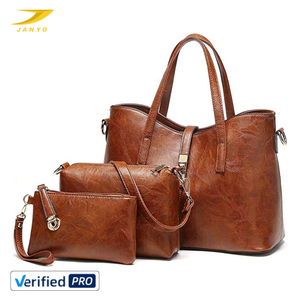



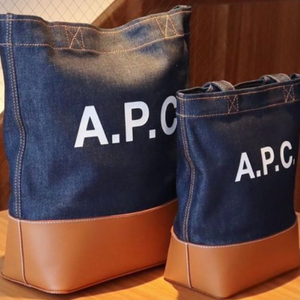
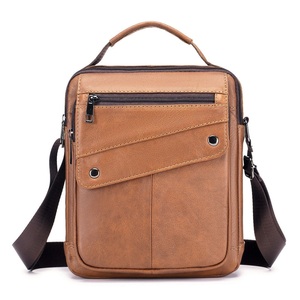


Established in 1996 in Kolkata, West Bengal—India's historic epicenter of fine leather tanning and precision leatherwork. Operating as a Government of India recognized export establishment with verified environmental and social governance.
Procurement of luxury leather bags, corporate accessories, and private label collections has fundamentally shifted from transactional piece-rate pricing to complex, multidimensional vendor assessment. Corporate buyers from the United States, the European Union, the United Kingdom, and the Asia-Pacific region now evaluate manufacturing partners through the prism of supply chain transparency, digital data integration, regulatory conformance, and rapid-prototyping responsiveness. As legacy European manufacturing costs climb beyond commercial feasibility for mid-to-high fashion tiers, India—specifically the specialized tanning and artisanal clusters around Kolkata—has consolidated its status as the prime global destination for high-value OEM/ODM leather manufacturing.
Under upcoming European Union Deforestation Regulation (EUDR) directives and ecodesign mandates, every leather piece exported must present verifiable provenance tracing down to the municipal or farm holding coordinates. Forward-thinking suppliers integrate QR-embedded serials and cryptographic digital product passports (DPPs) directly within the interior lining seam. This structural data log confirms that raw hides were derived strictly as agricultural byproducts and tanned under strict non-deforestation guarantees.
The era of rigid 5,000-unit minimum order barriers per SKU has ended. Modern luxury retail models utilize drop-based inventory rhythms. OEM exporters must accommodate flexible minimum batch production (100–300 units per colorway) paired with rapid 7-day CAD pattern turnaround. By employing digital laser nesting systems, sample scrap rates are slashed from 18% to under 4%, drastically compressing both sample development overhead and production initiation phases.
Supply chain diversification ("China + 1") has prompted international brand conglomerates to shift baseline allocations to India. Supported by the Indian Government’s preferential trade agreements, export incentivization frameworks, and duty exemptions on specialized European machinery, exporters in Kolkata deliver landed unit costs 22% to 35% lower than comparable Italian workshops while operating at identical or superior tensile and finishing metrics.
How luxury leather craftsmanship balances historic hand-finishing with advanced polymer stabilization, bio-circular chemistry, and mechanical longevity.
Traditional chrome tanning is increasingly restricted by luxury conglomerates targeting cradle-to-gate carbon reductions. Our engineering focuses on zeolite-based and vegetable-tanned formulations derived from chestnut, quebracho, and upcycled olive leaf extracts. The resulting leather achieves exceptional thermal stability, soft drape, and a biodegradable profile that avoids hexavalent chromium generation throughout both production and consumer end-of-life cycles.
Hardware failures represent 68% of commercial handbag returns. High-tier OEM manufacturing demands Physical Vapor Deposition (PVD) coated solid brass and forged zinc alloy components. Subjected to 96-hour neutral salt-spray testing (ASTM B117), these components display extreme resistance to sweat-induced galvanic corrosion, tarnishing, and mechanical binding, even in high-humidity coastal climates.
Delamination of raw leather cut edges destroys brand equity. Modern factory applications employ four-stage thermo-cured waterborne polyurethane edge lacquers, mechanically buffed and hand-sanded between coats. Combined with continuous-filament, bonded nylon thread sewn at 3.5mm pitch with triple-backtack reinforcements at stress gussets, handles safely withstand pull tests exceeding 250 Newtons.
A detailed audit matrix comparing general commodity export specifications against our ISO-aligned, SMETA-audited manufacturing floor standards.
| Quality Metric / Parameter | Conventional Commodity Exporter | Raja & Mitsu Fashions (OEM/ODM Export Standard) | Verification Standard |
|---|---|---|---|
| Raw Hide Sourcing | Mixed unverified tanneries, spot-market trading | 100% LWG Certified Gold & Silver Rated Tanneries (Strict Tracing) | LWG Audit Protocols |
| Color Fastness to Rubbing | Dry: 50 cycles / Wet: 20 cycles (Grade 3) | Dry: >500 cycles / Wet: >150 cycles (Grade 4.5 Minimum) | ISO 11640 (Veslic Method) |
| Flexing Endurance | 20,000 to 30,000 cycles before grain cracking | >100,000 cycles with zero crack or grain separation at room & subzero temps | ISO 5402-1 (Bally Flexometer) |
| Hardware Durability | Flash gold electroplate (<0.05 micron), standard alloy | PVD titanium-nitride or multi-coat lacquer on solid brass/zinc (>0.25 micron) | ASTM B117 Salt Fog 96h |
| Edge Finishing Process | Single or double direct rubber paint dip, unbuffed | 4-Step process: Prime coat, double fill, thermal smooth, hand-sand, top-seal | SATRA TM173 Edge Flex |
| Social Compliance & Labor | Self-declared or unregulated subcontracting | SMETA (Sedex 4-Pillar Audited), zero unauthorized subcontracting | Sedex Third-Party Audit |
| Chemical Safety Compliance | Basic spot testing, frequent phthalate risks | Strict EU REACH, California Prop 65, AZO-free, Cr(VI) non-detectable (<3 ppm) | EN ISO 17075 / GC-MS Lab |
Direct, transparent answers regarding tech packs, sampling protocols, commercial terms, landed logistics, and custom branding capabilities.
Our baseline production run is calibrated for agility. For standard handbag silhouettes, our MOQ begins at 100 units per style per colorway. For small leather goods (wallets, cardholders, and passport folios), our typical MOQ is 250 units. For custom leather tanning involving bespoke Pantone mill-runs, leather tanneries mandate approximately 1,500 square feet of total yield, which can be allocated across multiple product styles within the same collection.
Upon receiving complete tech packs, dimensional drawings, or physical reference samples, prototype delivery follows a structured timeline. First-round fit and pattern samples using in-stock factory leather are completed in 7 to 10 working days. Master approval samples with custom dyed leathers, custom hardware molds, and bespoke debossed branding require 18 to 22 working days.
Yes. We execute fully customized private label programs. We manufacture custom CNC zinc-alloy and brass hardware dies for debossed pullers, magnetic plates, and turn-locks. Branding services include heat debossing, gold/silver foil stamping, high-frequency embossing, laser engraving, and custom woven interior labels. We also fabricate matching dust bags (organic GOTS-certified cotton or brushed flannel) and rigid custom gift boxes.
As a Government of India recognized export star establishment, we routinely ship under FOB (Kolkata Port or Airport), CIF, and DDP (Delivered Duty Paid) terms directly to brand fulfillment distribution centers across North America, Europe, Australia, and Asia. Air cargo routes route via Netaji Subhash Chandra Bose International Airport (CCU), while ocean containers depart from the Port of Kolkata / Haldia Dock complex.
Every export consignment leaves our docks with a comprehensive compliance dossier: Certificate of Origin (GSP/COO), LWG tannery environmental verification serials, REACH non-hazardous chemical declaration sheets, Formaldehyde & Azo dye non-detection test certificates from SGS/TÜV/Intertek labs, and detailed commercial shipping invoices with precise HS tariff code designations.
We operate an internal 4-stage Quality Gate: Raw material sorting (grain and thickness sorting via dial micrometers), cut-panel precision inspection, in-line assembly line checking (stitch pitch, glue clean-up, handle anchoring), and 100% final item inspection under specialized high-CRI color inspection lighting booths. We welcome third-party inspection firms (e.g., QIMA, Bureau Veritas, SGS) prior to final packing container loading.