
30+
Years Manufacturing Heritage
60,000
Monthly Finished Capacity
100%
SMETA & LWG Audited
3 Continents
Global Export Coverage
Engineered Contract Leather Catalog
Precision-crafted OEM/ODM leather and performance PU accessories engineered to rigorous international retail tolerances.
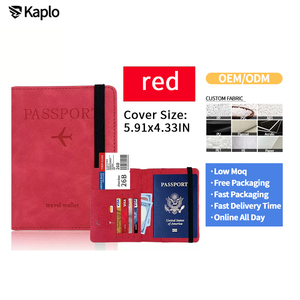
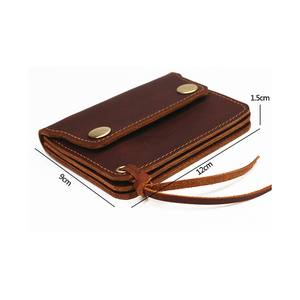
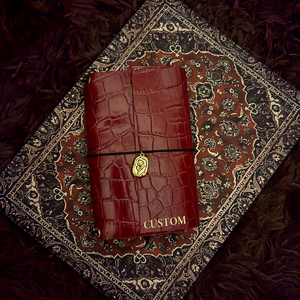
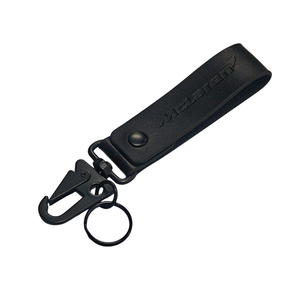
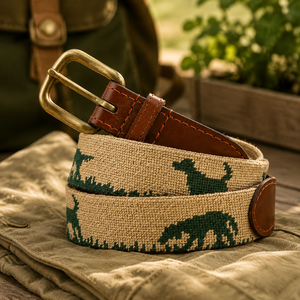
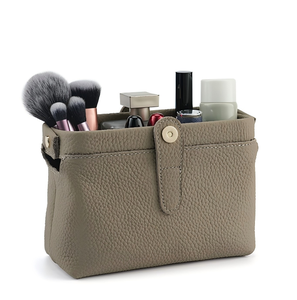
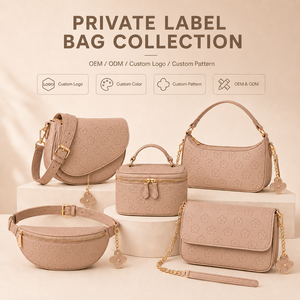
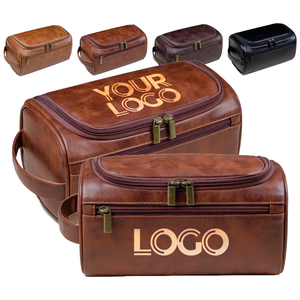
Enterprise Strengths & Production Architecture
Combining traditional bench craftsmanship with audited industrial throughput for global lifestyle labels.
Navigating global supply chain volatility requires a contract manufacturing partner anchored by audited compliance, certified tannery networks, and flexible technical execution. Operating with over three decades of specialized leathercraft expertise, our integrated production framework fulfills OEM and ODM mandates across North America, the European Union, and the Asia-Pacific region.
We serve as an integrated industrial extension of luxury brands, high-growth direct-to-consumer labels, and corporate licensing houses. From interpreting proprietary tech packs to executing complex edge finishing, hand-skiving, structural bonding, and custom hardware integration, our facilities operate under strict ISO and international export standards.
LWG & SMETA Audited
Full social accountability verified through Sedex Members Ethical Trade Audits (SMETA 4-Pillar). Raw materials source exclusively through Leather Working Group (LWG) certified tanneries maintaining Gold and Silver environmental compliance.
60,000 Units/Month Scalability
Equipped with computerized die-cutting, programmable pattern stitchers, and automated edge-inking units, our production lines easily balance micro-capsule pilot runs with continuous 60,000-unit monthly volume orders.
Second-Gen Technical Precision
Built upon a multi-generational legacy in artisanal leathercraft. Master pattern makers translate 2D conceptual renders into production-ready physical prototypes within 7 to 10 working days, protecting cross-batch dimensional stability.
Procurement & Material Technology Trends
Strategic analysis for enterprise procurement teams preparing for 2026–2030 sourcing cycles.
The contract leather manufacturing landscape is undergoing structural transformation. Procurement teams are moving away from opportunistic spot-market buying toward verifiable, low-carbon, and resilient supply chains. Sourcing professionals must adapt to the following structural procurement developments:
ESG Sourcing & Traceability Mandates
Regulatory frameworks such as the EU Corporate Sustainability Due Diligence Directive (CSDDD) make farm-to-finish traceability essential. Tier-1 contract manufacturers must provide verifiable chain-of-custody documentation, ensuring leather is deforestation-free, chromium-stabilized, and derived solely as a verified agricultural byproduct.
Hybrid Bio-Based & Recycled Polymers
The boundary between traditional leather and synthetic alternatives is shifting. Enterprise buyers increasingly specify solvent-free, water-borne PU, post-consumer recycled (PCR) microfibers, and bio-composites utilizing agricultural waste fillers to achieve luxury hand-feel while cutting fossil-fuel dependency.
Embedded Hardware & RFID Shielding
High-end corporate travel goods, luxury passports, and slim card carriers now require embedded security and tech compatibility. Industrial edge-folding techniques must cleanly house ultra-thin Faraday shielding fabrics and custom micro-buckles without compromising ergonomic lines or seam durability.
Industry Evolution: The Next Decade in Leather Production
Bridging traditional hand-skiving heritage with automated computer-numeric tooling.
The modern contract leather facility is no longer just a cut-and-sew assembly workshop—it operates as a precision engineering facility. As labor demographics change globally, production excellence depends on human mastery supported by automated manufacturing systems.
Automated Nesting and Computerized Die-Cutting: Advanced CNC oscillating knife tables and high-precision laser cutters inspect hides for natural grain variations, stretch axes, and surface anomalies, automatically optimizing yield by up to 18% compared to traditional manual clicking presses. This directly lowers unit bill-of-materials (BOM) costs while minimizing tannery scrap.
Environmentally Formulated Edge Coatings: Edge performance remains the primary longevity indicator for luxury leathergoods. Modern factories have transitioned away from solvent-based coatings toward automated triple-coat roller-dye lines utilizing bio-polymer compounds. These prevent temperature cracking, withstand over 50,000 flex cycles at -15°C, and meet California Proposition 65 and REACH chemical safety thresholds.
Digital Tech-Pack Integration & Virtual Prototyping: Sourcing timelines that historically consumed 16 weeks can now be compressed to less than 30 days. By ingesting 3D CAD patterns directly into automated pattern-making machinery, our sampling team produces production-grade first samples within 7 business days, shortening lead times for global retail deployments.
Procurement FAQ for B2B Sourcing Directors
Addressing the technical, regulatory, and logistics questions raised by international sourcing teams.
What are your standard Minimum Order Quantities (MOQ) for custom OEM/ODM leather goods?
Our standard production MOQs generally start at 300 to 500 units per colorway for genuine cowhide small leather goods (cardholders, wallets, key organizers) and 200 units per style for structured travel briefcases and large cosmetic cases. For specialized custom-embossed PU, vegan composite alternatives, or custom-molded metallic hardware, MOQs are determined by tannery dye lots and metallurgy setup parameters.
How do you verify material authenticity, chemical safety, and international compliance?
Every raw material batch undergoes strict incoming quality control (IQC). We provide comprehensive mill test certificates confirming compliance with EU REACH (SVHC-free), RoHS, and California Proposition 65 restrictions on azo dyes, formaldehyde, and heavy metals. Genuine hides are sourced exclusively via LWG-certified tanneries, ensuring verified chemical management throughout the tanning process.
What is your typical lead time for physical prototypes versus commercial bulk production?
Prototype development generally takes 7 to 10 working days upon receiving complete 2D/3D tech packs and approved material specifications. Bulk production lead times average 30 to 45 business days post-sample sign-off and receipt of deposit, depending on order size and whether custom-tooled zinc-alloy or solid brass hardware is required.
Can your facility produce private label hardware with bespoke finishes and anti-tarnish coatings?
Yes. We operate dedicated CNC tooling and electroplating partner networks capable of producing custom debossed brass buckles, laser-engraved stainless steel zipper pulls, magnetic snaps, and custom turnlocks. All metal components undergo 48-hour neutral salt-spray (NSS) testing to guarantee corrosion resistance and anti-tarnish protection in high-humidity markets.
What quality assurance (QA) frameworks are implemented during in-line and end-line assembly?
Our facilities implement AQL 1.5 / 2.5 inspection standards across all production runs. Quality assurance covers four dedicated checkpoints: Raw Hide IQC, Cut-Piece/Skiving Dimensional Verification, In-Line Work-in-Progress (WIP) Seam & Stitch Count Inspections, and 100% Final End-Line Inspection checking edge paint adhesion, zipper torque, and tensile drop strength before export packaging.
Initiate Your Contract Manufacturing Brief
Connect with our technical product engineering team to discuss material selection, prototype development, tooling feasibility, and commercial wholesale schedules.