
In modern accessory sourcing, the leather waist bag—also termed the utility sling, belt pack, or crossbody modular pouch—has evolved from a retro-casual silhouette into an essential luxury and outdoor travel category. Global brands seeking OEM/ODM contract production require tighter dimensional tolerances, advanced moisture protection, and validated supply chain transparency.
Procuring commercial-grade leather waist bags and small leather goods (SLGs) at scale requires deep institutional manufacturing capability. Global lifestyle, streetwear, and corporate brands face rising regulatory scrutiny concerning environmental compliance (such as the EU Deforestation Regulation - EUDR and REACH chemical limits) alongside stricter end-consumer expectations for structural performance. As a premier leather goods exporter operating with decades of specialized craft, we combine artisan leather handling with strict industrial automation.
This industry manual outlines technical benchmarks for leather selection, hardware endurance, cost structures, and manufacturing workflows designed specifically for wholesale sourcing directors, luxury product developers, and private label importers worldwide.
Direct-from-factory small leather goods, lifestyle belts, functional pouches, and utility carriers manufactured under strict SMETA ethical compliance.
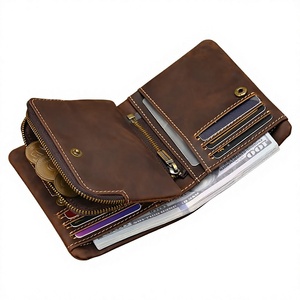
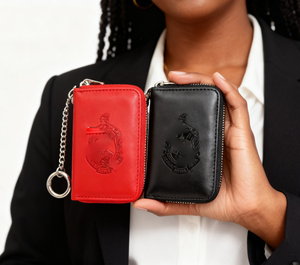
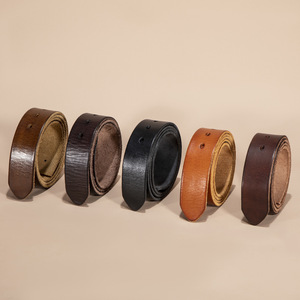
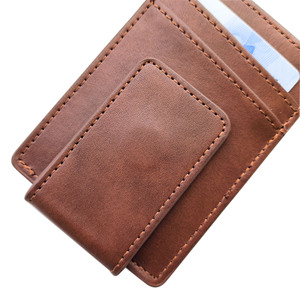
Strategic purchasing insights for 2025–2028: How compliance shifts, cross-body silhouettes, and hybrid textiles dictate high-yield inventory investments.
Global consumer scrutiny demands verifiable supply chains. Leather Working Group (LWG) Gold/Silver rating compliance is no longer a luxury differentiator—it is a mandatory baseline for North American and European border clearance under tightening circularity regulations.
Tanneries operating with closed-loop effluent treatment and Chrome-Free (Aldehyde or Synthetic Tanned) processing are dominating tier-1 RFP approvals. Corporate buyers prioritize mills offering complete hide traceability back to ranching origins.
The traditional fanny pack has transformed into an anatomical cross-body sling bag. Modern designs incorporate ergonomic breathable air-mesh backing fused with supple full-grain bovine or semi-vegetable tanned leather panels.
High-end corporate and travel collections require modularity: quick-release Fidlock magnetic buckles, dual-orientation strap anchors, and discrete concealed passport pockets lined with electromagnetic shielding materials.
Heavy leather finishes are being replaced by lightweight drum-dyed skins (0.9mm to 1.1mm) treated with sustainable, PFC-free water-resistant polymer washes. This addresses the urban commuter's requirement for all-weather utility without adding dead weight.
Additionally, specialized hardware finishes such as PVD gunmetal, micro-sandblasted brass, and aerospace anodized aluminum allow brands to achieve distinctive brand positioning and long corrosion lifespans.
A quantifiable breakdown of structural parameters used in evaluating leather waist bag production runs.
| Evaluation Parameter | Commercial Grade (Fast Fashion) | Export Quality (Raja & Mitsu Standard) | Test Standard / Verification |
|---|---|---|---|
| Leather Substrate | Split leather with thick PU coating (0.6-0.8mm) | Full-grain or top-grain bovine hide (1.1-1.3mm) | ISO 2589 (Hide Thickness Precision) |
| Tannery Auditing | Uncertified regional tanneries | LWG (Leather Working Group) Certified | LWG Audit Protocol Score > 85% |
| Edge Finishing | Single-pass oil edge, high cracking risk | 4-layer Italian edge paint, heated burnishing | Bally Flexometer Test (20,000 cycles) |
| Tensile Seam Strength | Monofilament nylon (< 180 N) | Bonded poly-core bonded thread (≥ 380 N) | ISO 13934-1 Seam Tensile Test |
| Zipper Hardware | Standard zinc alloy slide, teeth oxidation risks | YKK/SBS Waterproof tape, PVD anti-rust electroplate | ASTM B117 Neutral Salt Spray (≥ 72 hrs) |
| Lining Tensile Wear | 60D low-count polyester | 210D/420D ripstop nylon or twill cotton | Martindale Abrasion > 35,000 Rubs |
Founded in 1996 and recognized by the Government of India as an elite manufacturer & exporter, our facilities merge generational leather craftsmanship with high-throughput production lines.
Every square decimeter of raw bovine, buffalo, or goat skin is procured from Leather Working Group certified partners, guaranteeing stringent environmental management, wastewater processing, and ethical chemical usage throughout tanning.
Our production facilities maintain comprehensive compliance with Sedex Members Ethical Trade Audits (SMETA 4-Pillar), protecting your brand against ethical and labor risks while guaranteeing safe, fair-wage workshop ecosystems.
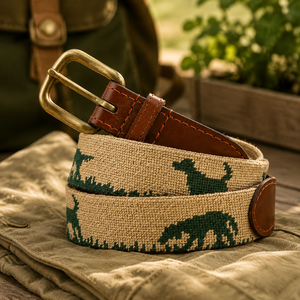
Featuring a modular shop-floor layout, our team delivers high throughput across structured handbags, utility waist bags, wallets, and needlepoint leather belts, accommodating both fast sample prototyping and reliable bulk export shipments.
Serving premier fashion catalogs in the United States, Canada, the United Kingdom, Germany, the Netherlands, Scandinavia, Spain, Australia, and Japan. Our customs specialists handle seamless FOB, CIF, or DDP fulfillment.
A proven, five-stage agile workflow built to de-risk design conversion and eliminate quality variations from prototype to shipping container.
Our technical modelers review your sketches, 3D renderings, and bill of materials (BOM). We provide a formal Design For Manufacturability (DFM) assessment to optimize hide utilization, skiving profiles, and seam reinforcement points.
Using computerized CNC leather cutters and precision edge-skiving tooling, our master sample-makers construct master patterns within 7 to 10 days. Physical counter-samples are dispatched for dimensional validation and wear testing.
Custom dye-lot compounding matches your exact Pantone codes. Raw hides undergo laboratory pull-up, crocking (rub fastness), and tensile testing before bulk leather clicking commences across our workshop floor.
Our craftspeople execute computer-guided stitching, multi-coat edge burnishing, and hardware riveting. In-line quality inspectors check stitch uniformity (7-8 stitches per inch) and check zero-tolerance torque thresholds on zippers and buckles.
100% of finished units undergo metal-detector inspection, silica gel moisture-controlled polybagging, and drop-tested export master carton crating, accompanied by comprehensive AQL 2.5/4.0 inspection reports.
Upload your technical pack or 2D dimensioned sketches. Our master engineering team will review feasibility and quote target unit economics within 24 business hours.
Critical manufacturing, MOQ, compliance, and material insights compiled by our global engineering teams.
Our standard production MOQ for custom OEM leather waist bags typically starts at 300 to 500 units per style, with flexibility across 2 to 3 colorways depending on leather hide specifications. For bespoke tannery dye runs with unique Pantone matching, hide minimums dictate batch requirements (typically 1,000 square feet). We also offer rapid sampling and limited pilot trial orders for emerging boutique collections looking to scale sustainably.
All leather substrates used across our product portfolio comply with REACH Annex XVII, CPSIA, and California Proposition 65 standards, completely free of Azo dyes, Chromium VI, and restricted phthalates. Raw hides undergo standardized laboratory testing: Bally flexometer resistance (minimum 20,000 dry cycles without surface cracking), dry/wet crocking testing (ISO 105-X12 ≥ 4.0), and color-migration protection against light textiles.
Yes. Contemporary waist bags and urban utility packs frequently combine classic leather exteriors with modern hardware systems. We regularly integrate genuine YKK AquaGuard® waterproof zippers, SBS reverse-coil coated zippers, Fidlock® magnetic quick-release buckles, aluminum alloy cobra buckles, and custom-molded Zamak alloy hardware. Every batch of metal components undergoes 72-hour neutral salt-spray testing to prevent tarnish and corrosion in humid transit environments.
Once tech packs and master patterns are finalized, physical prototypes are created and shipped within 7 to 12 business days. Upon sample sign-off and deposit receipt, bulk manufacturing takes approximately 35 to 50 days, depending on volume complexity and tannery lead schedules. Urgent fast-track seasonal replenishments can be coordinated through our continuous-supply raw material inventory reserves.
Yes. We offer fully customizable private-label packaging and component integration. Options include custom-woven jacquard linings, certified electromagnetic RFID-shielding fabrics for internal security sleeves, heat-debossed logos, high-definition laser-cut leather patches, and metallic hot-stamp branding. Export packaging incorporates FSC-certified recycled paper hanging cards, cotton dust covers, and heavy corrugated master cartons tested for international air and ocean cargo handling.
Connect with our technical development team for instant tech-pack evaluations, tannery swatch books, or custom quote matrices. We manage every production variable to protect your delivery timelines and brand equity.