
From full-grain luxury carryalls to industrial-grade protective leatherware, each category demonstrates our end-to-end technical production capabilities, ISO compliance, and scalable output.
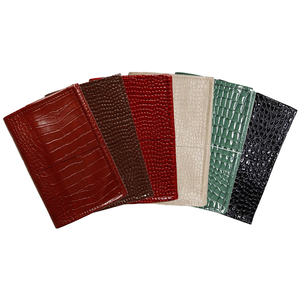
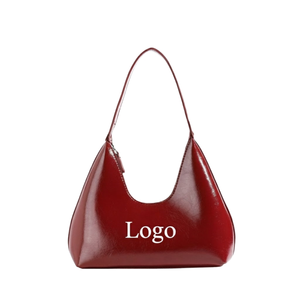
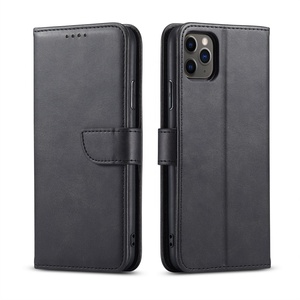
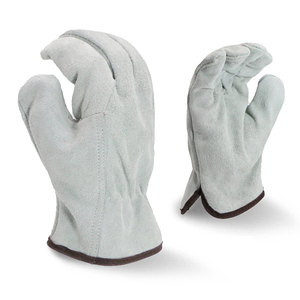
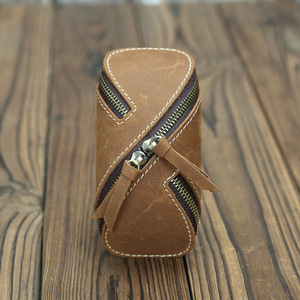
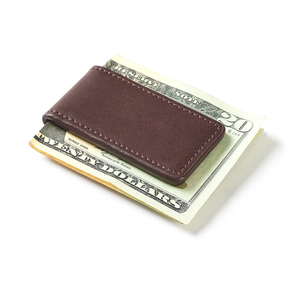
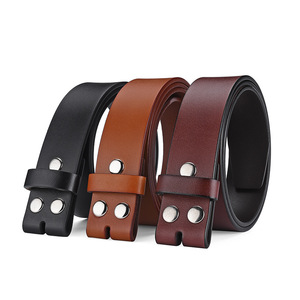
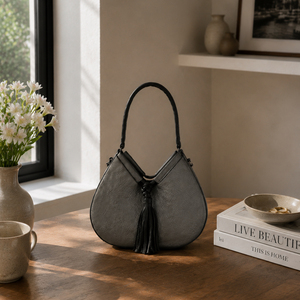
Founded in 1996 in Kolkata, West Bengal, our female-founded, second-generation enterprise merges multi-generational artisanal leather heritage with modern international compliance, serving prestigious brands across Europe, North America, and the Asia-Pacific region.
Every square foot of cowhide, calfskin, and goat leather is traceable to Leather Working Group (LWG) certified tanneries. Our raw material streams prioritize strict effluent treatment protocols, chromium-recovery recycling loops, and documented zero-discharge benchmarks that satisfy global ESG mandates.
Operating under continuous Sedex Members Ethical Trade Audit (SMETA) standards, our Kolkata manufacturing compound enforces living wage frameworks, zero-forced-labor assurances, complete workplace ergonomics, and transparent governance verified by third-party international auditors annually.
Engineered for high-throughput brand execution, our scalable facility balances computerized leather nesting cutters, automatic edge-skiving benches, and German-machined stitching heads alongside master hand-finishing benches. This setup delivers 60,000 finished units monthly without compromising microscopic QA tolerances.
Strategic procurement is transitioning from superficial price-per-piece negotiations toward end-to-end supply chain transparency, technical sustainability compliance, and digitally unified sampling workflows.
Tightening chemical regulations in the European Union (REACH Annex XVII) and North America have forced major fashion houses to phase out conventional chrome tanning in favor of aldehyde-free, zeolite, and organic syntan wet-white chemistry. Wet-white processing yields superior dye-affinity for pastel palettes while cutting heavy metal sludges by 94%, ensuring that finished goods maintain hypoallergenic properties and zero free-chromium risks.
Traditional physical sampling rounds—often demanding 3 to 5 physical air shipments between Western design centers and Asian manufacturers—are rapidly being supplanted by high-fidelity CLO3D and Browzwear digital simulations. Our Kolkata sample rooms utilize digital hide maps to simulate grain stretch, drape coefficients, and hardware tension in software, shrinking product launch cycles from 16 weeks to under 21 business days.
With trade tariffs, rising domestic labor costs, and operational bottlenecks across Southern China, procurement leaders are consolidating volume into Kolkata and Tamil Nadu's integrated leather clusters. India offers complete domestic cattle-to-crust value chains, duty-free trade corridors with major markets, and an English-speaking technical merchandising layer that simplifies corporate audit governance.
Enterprise private label manufacturing requires objective, repeatable mechanical and chemical testing. Below are the standard testing parameters executed on every production run at Raja & Mitsu Fashions.
| Evaluation Parameter | International Standard | Laboratory Test Method | Acceptance Threshold | Compliance Tier |
|---|---|---|---|---|
| Bally Dynamic Flex Resistance | ISO 5402-1:2017 | 100,000 Flex Cycles @ 20°C & -10°C | Zero grain cracking or finish delamination | Luxury Tier 1 |
| Crockmeter Rub Fastness (Wet/Dry) | ISO 11640 / DIN 53339 | Felt pad rub cycles (Dry: 500, Wet: 150) | Grey Scale ≥ Grade 4-5 color transfer | LWG Verified |
| Stitch Seam Tensile Shear | ASTM D2261 / ISO 13936 | Constant rate of extension (CRE) load test | ≥ 180 N breaking point force | Mil-Spec Structural |
| Hardware Salt-Spray Corrosion | ASTM B117 (Neutral Salt Fog) | 48-Hour Continuous Exposure Chamber | No pitting, oxidation or galvanic corrosion | Marine Grade |
| Hexavalent Chromium VI Testing | ISO 17075-1 (Colorimetric) | Thermal aging extraction & HPLC testing | Non-Detectable (< 3.0 mg/kg limit) | REACH Pass |
Clarifying MOQs, sampling lead times, customs logistics, material authentication, and third-party facility audits.
Our standard baseline MOQ is 100 to 200 units per style/colorway for genuine leather bags and briefcases, and 300 to 500 units for small leather goods (wallets, cardholders, and tech sleeves). Because we maintain dedicated in-house sample lines and direct partnerships with LWG tanneries, we can accommodate tiered ramp-up programs for established brands testing new silhouettes or limited capsule collections.
All production runs are governed by a stringent Restricted Substance List (RSL) aligned with EU REACH Regulation (EC No 1907/2006) and California Proposition 65. Our raw hides undergo independent lot-testing through accredited testing laboratories (SGS, Intertek, or TÜV Rheinland) to verify the absence of Chromium VI, banned azo dyes, formaldehyde, phthalates, and per- and polyfluoroalkyl substances (PFAS). Full lab batch certificates are provided with every bill of lading.
Initial prototype development and counter-sampling requires 10 to 14 business days upon receipt of your CAD tech pack or reference sample. Bulk raw material procurement and custom hardware casting typically take 2 to 3 weeks. Full bulk cutting, assembly, finishing, and QA inspection require 45 to 60 days depending on total batch volume, followed by immediate handoff to air or sea freight forwarding from Kolkata Port or Netaji Subhash Chandra Bose International Airport.
Yes. We maintain an open-door policy for scheduled and unannounced audits conducted by internationally certified inspectors including Sedex/SMETA, BSCI, WRAP, and client-appointed quality control teams. As a Government of India recognized export house, our facility records, employment documentation, wage structures, and safety installations are fully transparent and audited annually.
We provide comprehensive private label engineering. This includes 3D die-casting for custom zinc-alloy and solid brass hardware (clasps, pullers, dog-clips, and buckles) with electropolished, PVD, or electroplated finishes that endure 48-hour neutral salt-spray exposure. Branding options include micro-injection leather patches, deep hydraulic heat embossing, laser engraving, and custom jacquard woven interior linings.
Our dedicated export logistics team executes shipments across FOB, CIF, DDP, and Ex-Works incoterms. We issue all necessary customs documentation, including GSP Certificates of Origin, commercial invoices, phytosanitary declarations, and customs tariff classification codes (HS 4202 series), ensuring hassle-free clearance through US Customs (CBP) and European ports of entry.