
From architectural executive briefcases engineered for Tokyo commuters to handcrafted small leather goods, our facility pairs Indian artisan lineage with Japanese operational precision.
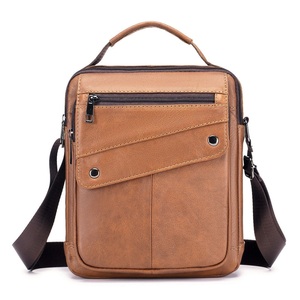 First-Layer Cowhide
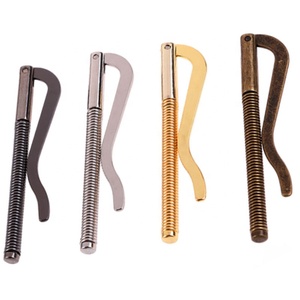 Slim Hardware
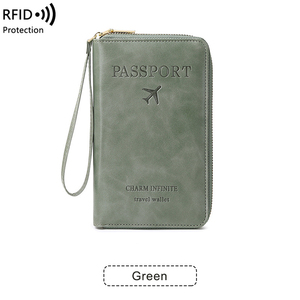 RFID-Protected
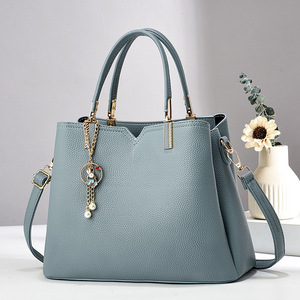 Structured Tote
 REACH Certified
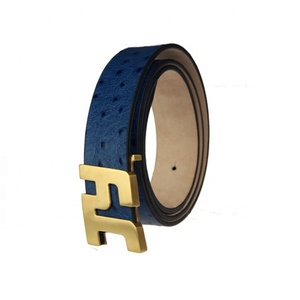 Feather-Edge Cut
 Artisan Assembled
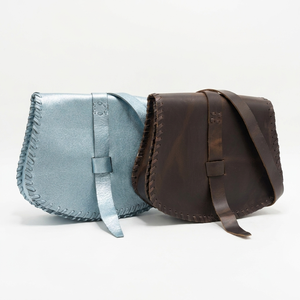 Dual-Tone Satchel
In Japanese business culture, a men's briefcase is not merely an accessory—it is an outward extension of professional dignity, discipline, and corporate stature. Sourcing managers from Tokyo, Osaka, and Nagoya demand manufacturing precision that surpasses typical European or North American specifications.
At Raja & Mitsu Fashions, our export manufacturing lines are calibrated specifically to the rigors of Japanese import standards. Through nearly three decades of OEM contract production from our Kolkata industrial hub, we have institutionalized protocols addressing the exact micro-tolerances required by Japanese trading firms (Sogo Shosha), premier department stores (such as Isetan, Mitsukoshi, and Takashimaya), and selective specialty chains (including Beams and United Arrows).
The single most definitive test applied by Japanese merchandisers during briefcase sample reviews is Jiritsu (自立 - the capacity to stand completely upright without tilting or folding). When a Japanese salaryman or executive enters a client conference room or takes a seat on the Shinkansen, corporate etiquette dictates that the briefcase must rest upright on the floor beside their feet. A bag that slumps or topples is viewed as a breach of composure and substandard craftsmanship.
To achieve this structural autonomy without imposing burdensome tare weight, our engineering team integrates multi-layered composite core architectures. Rather than utilizing cheap regenerated cardboard that degrades under summer humidity, we employ German-imported Texon cellulose structural boards combined with micro-cellular closed-cell EVA foam and 0.8mm internal spring-steel base ribs. This provides 360-degree perimeter rigidity, memory retention, and a permanent upright silhouette that endures years of daily commuting.
Japanese QC rejects rubbery, thick edge paint that peels under friction. We apply five sequential passes of Italian water-based polyurethane edge coating, followed by automated thermal ironing at 120°C and manual beeswax glazing to yield an ultra-slim, resilient edge radius.
Subway commute etiquette in Japan mandates silent operation. We engineer briefcase enclosures with bespoke symmetric brass zippers featuring diamond-buffed tooth heads. Sliders travel with frictionless, quiet fluidity without snagging high-twist wool business suit fabrics.
Walking between Tokyo station platforms requires featherlight engineering. By precision-skiving premium hides from 1.4mm down to 1.1mm across low-stress zones and utilizing reinforced micro-twill linings, our full-leather briefcases consistently register under 950 grams.
A successful OEM brief requires understanding the physical ecosystem of the Japanese professional. Every pocket dimension, handle drop height, and exterior seam is designed around everyday commuter routines.
Designed for traditional banking, trading houses, and legal firms. Incorporates designated Meishi-ire (business card case) slip pockets positioned directly under the main flap, enabling seamless card exchanges without rummaging.
Features ultra-flush exterior slip compartments with magnetic closures for quick Suica / Pasmo transit tap-in, coupled with rounded, double-stitched leather rolled handles designed to minimize hand fatigue when standing in packed train cars.
Equipped with an integrated rear trolley-sleeve strap that slides cleanly over carry-on luggage handles, and dual A4 document dividers fitted to protect legal paperwork from dog-earing during rapid transit between Tokyo and Shin-Osaka.
Treated with proprietary fluorocarbon-free hydrophobic top-finishes that repel sudden June downpours without blocking natural leather porosity, preventing water-spotting and dye transfer onto light summer Cool Biz shirts.
How the evolution of hybrid work models, sustainable purchasing criteria, and demographic shifts are redefining corporate leather procurement for Japanese labels.
The Japanese men’s leather bag market is undergoing a structural shift driven by modern lifestyle dynamics:
1. The Evolution Toward Hybrid 2-Way & 3-Way Architectural Briefcases: In the wake of ministry-level "Cool Biz" and "Smart Casual" corporate mandates, the line between formal attaché cases and functional commuter packs has blurred. Japanese professionals increasingly seek sleek leather briefcases that can seamlessly deploy stowable ergonomic shoulder straps or convert into horizontal business rucksacks for bicycle commuting, while preserving a crisp, corporate exterior.
2. Downsizing and Slim Gusset Profiles: Paperless office digitisation (denshika) has eliminated the requirement for accordion gussets capable of holding heavy paper ledgers. Today's premium Japanese customer favors slim-line profiles ranging between 6.5cm and 8.5cm in width, designed with dedicated high-density shock-absorbing sleeves for 13.3-inch to 14-inch MacBooks and iPads, paired with structured cable organisers.
3. Strict Traceability & LWG Tannery Credentials: The Japanese Consumer Affairs Agency and ESG committees of top retail chains now scrutinize supply chain origins. Commercial buyers actively avoid uncertified tanneries. Raja & Mitsu Fashions exclusively sources raw stock from Leather Working Group (LWG) certified tanneries, ensuring zero toxic azo dyes, strict hexavalent chromium (Cr VI < 3ppm) thresholds, and full water recycling compliance.
4. Subtle Palette Diversity Beyond Jet Black: While monochrome black remains the staple for formal corporate ceremonies (Nyushashiki), discerning Japanese buyers are rapidly scaling orders in deep espresso brown, midnight marine navy, and earthy slate taupe with subtle matte pulls that age with an authentic, gentle patina.
Clear, definitive operational criteria for trading companies, purchasing agents, and private label developers.
We regularly work with Japanese inspection agencies such as Boken, Nissenken, and QTEC. Our factory maintains dedicated inspection corridors that conform to JIS L 1096 and JIS S 1005 standards. Goods can either be inspected on-site in Kolkata prior to container sealing or routed through bonded Japanese domestic Kenpin facilities under agreed AQL 1.0 or 0.5 guidelines.
For customized OEM briefcase designs with bespoke tooling, our minimum initial production run starts at 100 to 200 units per colorway. Proto-sample turnarounds from CAD/tech-packs average 10 to 14 business days. Counter-samples incorporate your specified edge dyes, embossed logotypes, and branded dust bags for comprehensive internal review.
Yes. All leathers undergo third-party laboratory verification guaranteeing compliance with the Japanese Household Goods Quality Labeling Act and REACH annexes. All metallic hardware—buckles, D-rings, zipper teeth, and bottom sokubyo studs—is electroplated with anti-rust, nickel-free coatings that pass 48-hour continuous salt spray testing.
Monsoon moisture is a critical consideration for maritime shipments into Yokohama, Kobe, or Tokyo ports. We wrap each briefcase in breathable non-woven spunbond bags, insert food-grade dry-clay desiccant sachets, and line shipping cartons with vapor-corrosion barrier film. Outer cartons are engineered with 5-ply reinforced corrugated boards to prevent crush damage.
As an official Government of India recognized export house, Raja & Mitsu Fashions issues comprehensive Certificates of Origin under the India-Japan Comprehensive Economic Partnership Agreement (IJCEPA) under HS Code 4202.11, enabling eligible preferential tariff treatment and frictionless customs clearance through Japan Customs.
Briefcase handles and D-ring anchor points undergo cyclic pull-testing using specialized jerk-tester equipment loaded to 15kg for 5,000 cycles. We employ high-tensile bonded nylon threads with 7 to 8 stitches per inch (SPI) and back each anchor point with dual cross-stitched rivets to prevent handle failure under full cargo loads.
Combining second-generation craftsmanship heritage with international compliance certifications to de-risk your overseas leather manufacturing pipeline.
Our Kolkata production floor operates under the Sedex Members Ethical Trade Audit framework. Transparent labor practices, fair living wages, and zero child labor offer full compliance confidence for ESG-conscious brands.
Whether you need an artisanal capsule run of 200 bespoke vegetable-tanned briefcases or 15,000 corporate leather portfolios, our synchronized modular production lines scale effortlessly without sacrificing quality consistency.
Founded in 1996 and recognized by the Government of India, we are a female-founded enterprise delivering leather goods to premier fashion retailers across Tokyo, Osaka, London, New York, and Berlin for 30 consecutive years.
Submit your design brief, CAD drawings, or tech-pack today. Our engineering and sampling teams will provide structural feasibility reviews, preliminary costing, and a rapid prototyping schedule within 48 business hours.