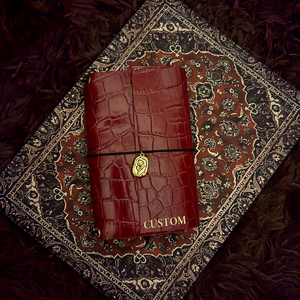
A technical treatise on the production, material integrity, and export logistics of custom leather notebook covers engineered for international stationery publishers, bespoke private labels, and luxury brands.
The global luxury writing and professional corporate gifting sector has shifted from disposable paper notebooks toward durable, modular, and sustainable personal goods. A premier leather journal covers supplier and exporter in Pakistan operates at the intersection of artisanal heritage and rigorous industrial quality systems. Pakistan’s leather manufacturing hubs—renowned in Sialkot, Karachi, and Lahore—work in close synergy with regional South Asian manufacturing hubs such as Kolkata to deliver high tensile strength hides, exceptional tactile longevity, and flawless perimeter saddle-stitching.
Whether servicing international brands throughout the European Union, the United Kingdom, North America, or Australasia, professional exporters fulfill complex tech-pack specifications: including precise debossing depths, integrated RFID-shielded pockets, solid brass pen clips, and hand-burnished edge sealing. Operating under stringent compliance frameworks including REACH, RoHS, and California Proposition 65, our integrated facilities deliver production predictability from rapid prototyping through container-load consignments.
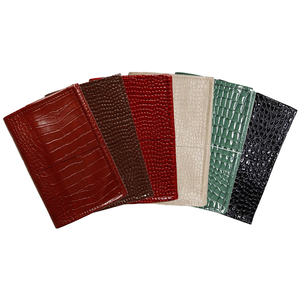
Examine our standard and custom product lines engineered to withstand heavy executive commuting, creative field journaling, and long-term daily archival use.
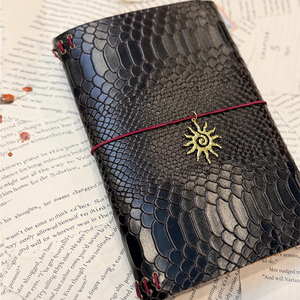
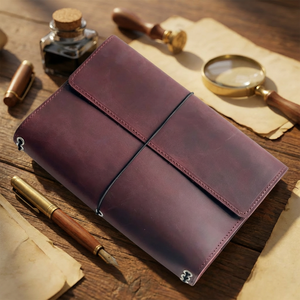
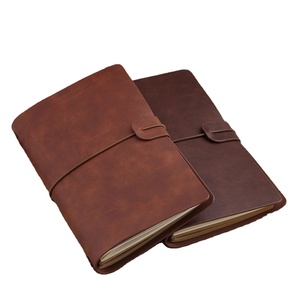
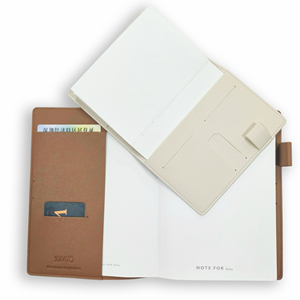
Understanding how industrial buyers, corporate brand managers, and independent stationers integrate custom leather covers into operational supply chains.
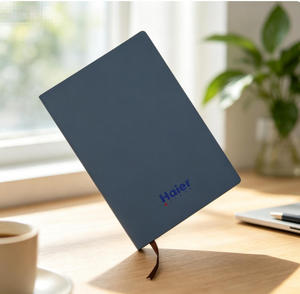
Multinational consulting firms, financial institutions, and legal groups procure debossed full-grain covers. Standardized A5 formats allow staff to replenish inner book blocks yearly while the leather shell develops an authentic patina, reinforcing corporate sustainability goals.
Indie stationery publishers require specialty vegetable-tanned bovine and buff hides. Using tight stitch gauges (7 to 8 stitches per inch) and hand-painted wax-coated edges, these folios achieve shelf prominence in high-end lifestyle boutiques in North America and Western Europe.
For exploration, marine, and construction environments, covers are engineered with pull-up oil-treated hides that self-heal from surface scratches. Incorporating elastic shock cords, internal pen sheaths, and weather-resistant clasps provides all-climate utility.
Strategic insights analyzing trade shifts, chrome-free tanning adoptions, and supply chain consolidations across South Asia.
Corporate ESG directives from the EU (CSRD compliance) and the United States have compelled procurement teams to eliminate heavy metals from the supply chain. Pakistani and regional tanneries have modernized their wet-end processing plants. Tanning drums utilize mimosa, chestnut, and tara extracts to generate vegetable-tanned leather covers that achieve zero-chromium run-off, comply with wastewater biological oxygen demand (BOD) guidelines, and offer pleasant earthy aromas suited for personal accessories.
The manufacturing corridor across Pakistan and eastern trade hubs like Kolkata leverages unmatched localized expertise. While high-yield raw bovine and water-buffalo skins originate from seasoned agricultural infrastructures, advanced small leather goods assembly lines execute die-cutting, structural skiving, edge-creasing, and precision stitch lines. This industrial specialization yields high unit consistency at scale.
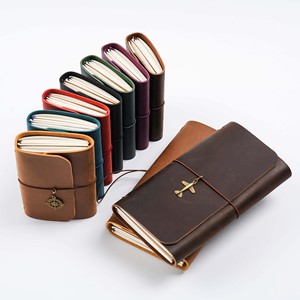
The static, glued notebook is increasingly replaced by traveler-style multi-elastic systems and magnetic ring mechanisms. B2B buyers now request bespoke spine hardware, tri-fold document sleeves, integrated passport slots, and business card organizers. This modular architecture boosts customer lifetime value through recurring refills.
Built upon three decades of disciplined OEM and private-label contract manufacturing for tier-one brands worldwide.
Our collaborative production ecosystems operate strictly under internationally recognized compliance protocols. We provide comprehensive chain-of-custody documentation, guaranteeing zero child labor, verified workplace safety, and chemical safety compliance for all shipments.
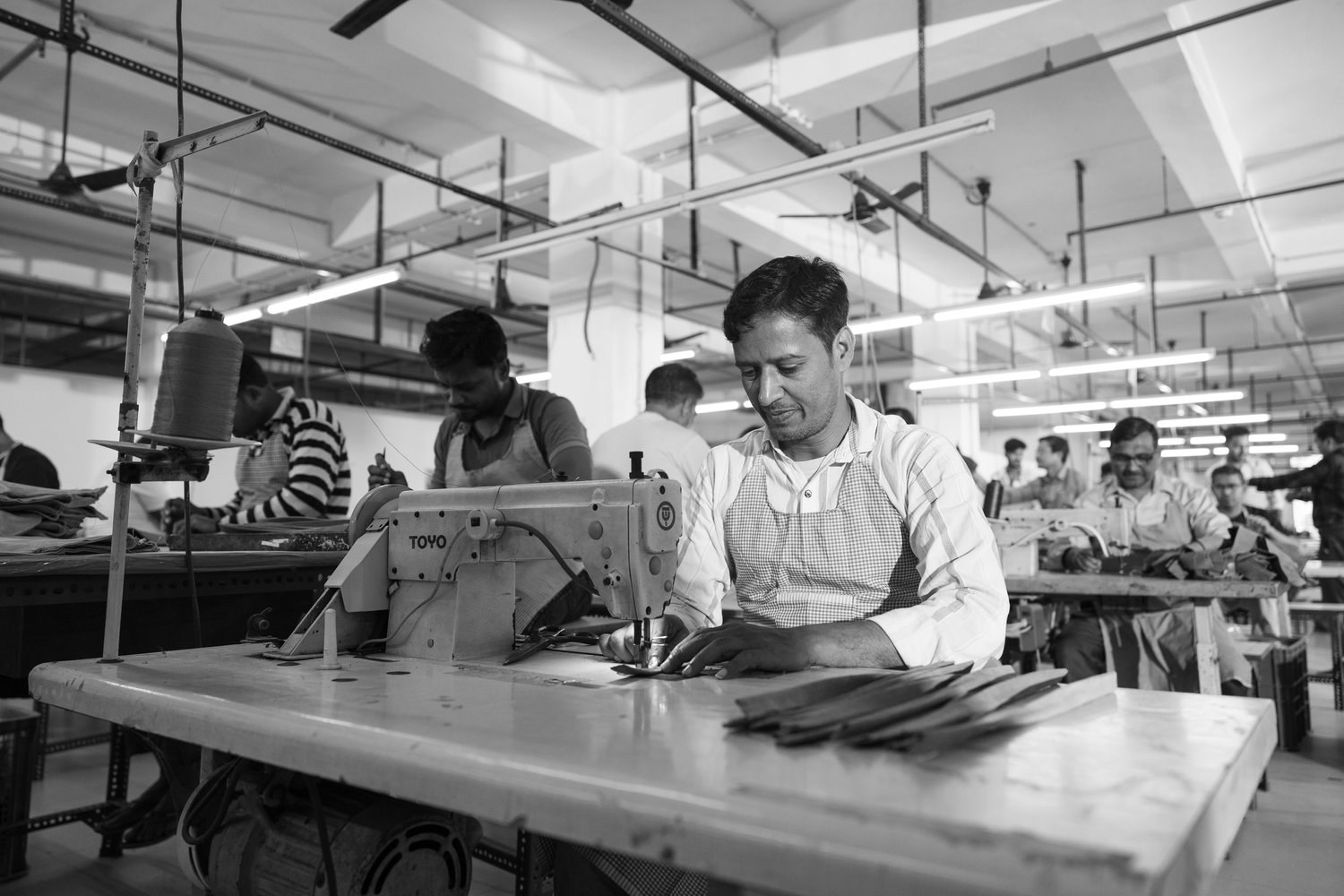
Edges are precision-skived to fractional millimeter tolerances (0.4mm–0.8mm), ensuring clean structural folding without bulky seams, especially critical for multi-slot card inserts.
Every leather batch undergoes Veslic rub-fastness testing, grain crack resistance tests, and flexometer fatigue cycles (up to 50,000 cycles) to guarantee covers will not crack along the spine.
Direct supply chain management with complete certificates of origin, airway bills, customs clearing support, and phytosanitary declarations for seamless entry through global ports.
Clear, direct technical answers for sourcing heads, quality assurance specialists, and brand managers.
Our standard production MOQ typically starts at 300 to 500 units per design/colorway for genuine full-grain leather, and 500 to 1,000 units for specialty embossed PU or faux-leather lines. For specialized corporate gift orders or prototype sample development, lower thresholds can be reviewed based on hide availability.
Yes. We routinely create custom cutting dies matched precisely to third-party book blocks including standard ISO sizes (A4, A5, A6, B5, B6) as well as proprietary proportions such as Traveler's Notebook regular/passport editions, Moleskine expanded editions, and Stalogy formats. We engineer exact spine allowances for pen loops and internal card slots.
For executive products, we suggest top-grain or full-grain vegetable-tanned cowhide (1.4mm to 1.8mm thickness) or drum-dyed buffalo leather. Buffalo hide offers deep fiber density and tensile strength against heavy friction, while crazy-horse pull-up finishes give character for vintage retail markets. For promotional volume campaigns, microfiber and polyurethane composite leathers deliver visual luxury within targeted unit costs.
We provide heat blind debossing, foil stamping (gold, silver, rose gold, matte black), laser etching, and metal emblem riveting. Hardware options feature anti-tarnish solid brass, gunmetal, antique copper, and brushed stainless steel snap buttons, elastic closure bands, and corner protectors.
All leathers and adhesives are evaluated for SVHC (Substances of Very High Concern) under EU REACH regulations, including zero Azo dyes, restricted Chromium VI levels, and lead-free metal trims. Every export lot comes with complete technical compliance documentation upon request.
Initiate sampling, discuss tech-pack feasibility, or request a complete wholesale material catalog. Our engineering team responds within one business day.
Get Catalog