

Engineered for commercial resilience, luxury aesthetics, and competitive customs margin clearance across Nairobi, Mombasa, and the broader COMESA marketplace.

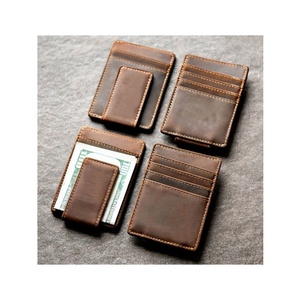
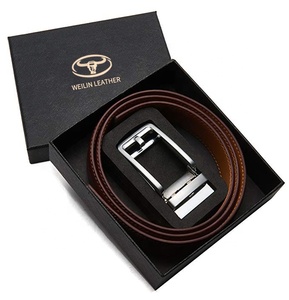
This comprehensive industry whitepaper evaluates the direct manufacturing, technical material compliance, and strategic trade bridge connecting China’s premier industrial leather goods manufacturing corridors to the rapid retail expansion of Kenya. Directed toward procurement executives, fashion brand owners, and logistics directors across Nairobi, Mombasa, and Kisumu, this document dissects technical grade parameters, macro-environmental factors, and port customs logistics needed for sustainable supply chain supremacy.
Kenya serves as the undisputed gateway to East and Central Africa, commanding pivotal influence within both the East African Community (EAC) and the Common Market for Eastern and Southern Africa (COMESA). As urban centers like Nairobi develop an economically empowered, brand-conscious middle class, commercial demand for high-end, durable, and sophisticated leather tote bags has accelerated exponentially. While Kenya retains an active domestic livestock sector, the localized tanning infrastructure predominantly exports raw salted hides or low-tier wet blue leather, resulting in a distinct structural deficit for high-grade, chromium-regulated, water-resistant top grain and full grain finished goods.
Leading Chinese manufacturing hubs—strategically centered in Shiling (Guangdong), Dongguan, and Pinghu (Zhejiang)—bridge this exact value gap. Through mature industrial supply chains, advanced computer numerical control (CNC) leather cutting, and automated skiving, Chinese partner facilities deliver economies of scale that cannot be replicated locally in East Africa. For Kenyan procurement directors, sourcing direct from export-certified Chinese facilities provides distinct unit margin advantages, consistent batch-to-batch colorimetric matching, and compliance with severe tropical atmospheric wear.
Strategic Sourcing Note: While direct tariff brackets under Kenya Revenue Authority (KRA) East African External Tariff (CET) enforce defined customs duties on imported accessories, high unit-yield leather tote bags that integrate laptop compartments, multi-functional hardware, and structured silhouettes yield gross retail profit margins exceeding 62% in high-traffic shopping districts such as Westlands, Karen, and Kilimani.
Exporting to Kenya requires strict technical adaptations that generic mass-market exporters routinely fail to address. A tote bag engineered for European seasonal rotations will quickly experience adhesive failure, edge-paint cracking, and structural collapse under equatorial UV exposure, red volcanic dust abrasion, and heavy daily multi-purpose commuting.
Nairobi's geographic elevation (1,795m) and seasonal dry cycles produce pervasive iron-rich dust particles. Premium export lines must utilize semi-aniline or poly-urethane top-sealed pull-up leathers with low static friction, preventing microscopic particulate embedding into pores.
For stock allocated to coastal distribution hubs such as Mombasa, Malindi, and Diani, average relative humidity regularly tops 85%. Totes must feature anti-fungal wet-tan formulations and non-corrosive solid brass or passivated zinc alloy hardware tested via 48-hour salt spray chambers.
Kenya's tech ecosystem ("Silicon Savannah") requires bags that transition from corporate tech park work stations to informal transit. Base panels require heavy bonded microfiber reinforcement board, double-box stitched handle roots, and neoprene-cushioned interior partitions that safely isolate 15.6" laptops.
The primary obstacle encountered by East African importers is clearing technical non-tariff regulatory frameworks. The Kenya Bureau of Standards (KEBS) executes rigorous oversight through the Pre-Export Verification of Conformity (PVoC) to Standards Programme. Shipments arriving at the Port of Mombasa or Jomo Kenyatta International Airport (JKIA) without a valid Certificate of Conformity (CoC) risk severe 15% punitive destination penalties, mandatory local testing charges, or port-level re-exportation.
Strict screening for Azo dyes, formaldehydes, and Chromium VI (Cr VI) content via ISO 17075 leather testing standards to pass KEBS import criteria.
Handle anchor tensile fatigue verification testing minimum 15kg dynamic loads across 5,000 cycles without structural stitching rupture.
Pre-shipment verification by authorized testing agencies (SGS, Intertek, or CCIC) within China prior to container sealing.
Direct upload of electronic CoC into the Kenya National Electronic Single Window System for immediate customs release in Mombasa.
Operating in harmony with global luxury standards, our integrated manufacturing lines bring decades of second-generation industrial discipline directly to Kenyan fashion houses, corporate gifting syndicates, and retail consortiums. We dismantle the uncertainty of international manufacturing through institutionalized auditing, traceable hide origins, and audited clean-room operations.
All raw hides trace back to LWG-audited tanneries adhering to strict zero-discharge chemical protocols, complete wastewater treatment, and verified animal welfare provenance.
Our production floors maintain full SMETA 4-Pillar audit certifications. We guarantee fair compensation, safe operational spaces, and zero child or forced labor across all assembly sectors.
With an active capacity exceeding 60,000 units monthly across totes, briefcases, cardholders, and accessories, we insulate Kenyan importers from holiday retail stockouts and supply disruptions.
Authoritative solutions to real operational inquiries submitted by commercial procurement managers across East Africa.
Partner directly with an enterprise-grade manufacturer possessing over 30 years of global export prestige, LWG-traceable supply chains, and dedicated logistics frameworks built for the Kenyan commercial sector.
Contact Us